Neither is better for everyone. A manual adjustment is a quick, hands-on thrust that often makes a “pop”; an Activator adjustment uses a small spring-loaded instrument to deliver a lighter impulse with no twisting. Research suggests both can help neck and back pain, and the right choice depends on your body, comfort and goals.
By Dr. Orr Soffer, DC · Chiropractor in Campbell, CA
If you have ever tensed up at the thought of your neck being twisted, or you have tried the instrument and wondered whether it “really did anything,” this guide is for you. You will get a plain-English comparison, what the research actually shows, and a short checklist to help you decide before your next visit.
What is the difference between an Activator and a manual adjustment?
A manual chiropractic adjustment is a high-velocity, low-amplitude thrust: your chiropractor positions the joint near the end of its range and applies a quick, controlled push by hand. You often hear a pop, which is gas releasing from the joint fluid, not bones “going back in.”
The Activator is a handheld, spring-loaded instrument. It delivers a very fast, low-force impulse to a specific spot, with you lying still and relaxed. There is no rotation of the neck or low back and usually no pop. Most people describe it as a firm tap.
Both aim for the same thing: getting a stiff, sensitive joint moving and calming the protective muscle guarding around it. They just take different routes. If you are curious how adjustments compare with gentler joint work, our post on spinal adjustment vs mobilization covers that side of the spectrum.
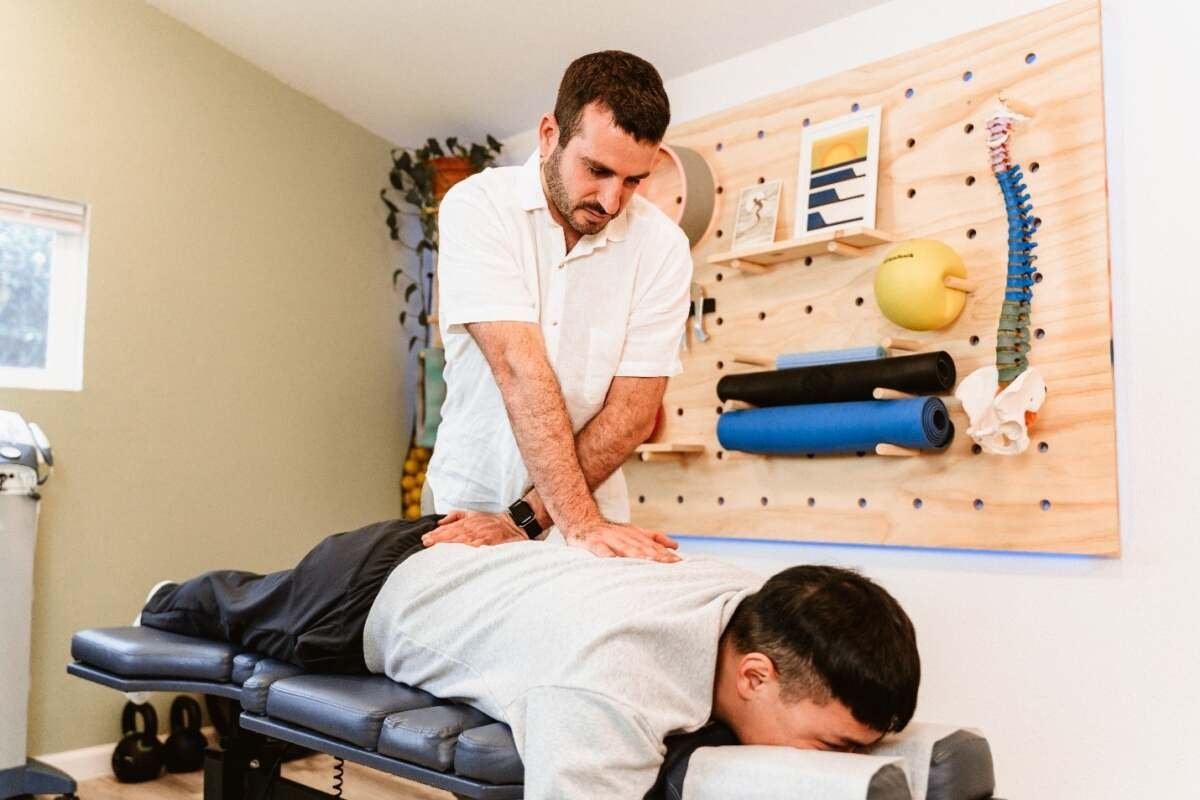
Activator vs manual: a side-by-side comparison
| Manual adjustment | Activator adjustment | |
|---|---|---|
| How it is delivered | By hand, with a quick thrust | Spring-loaded handheld instrument |
| Force | Moderate, adjustable by the clinician | Low and consistent |
| Twisting or positioning | Often some rotation or set-up | None; you lie still |
| The “pop” | Common | Rare |
| What it feels like | Brief stretch and release | A quick, firm tap |
| Often chosen for | Stiff, guarded joints in people comfortable with hands-on care | Nervous first-timers, very sore areas, small joints, people who prefer no twisting |
What does the research say?
The honest answer: the evidence comparing the two directly is limited, and the studies we have point in slightly different directions.
A head-to-head trial in low back pain, by Schneider and colleagues, randomly assigned 107 adults with recent back pain to manual manipulation, Activator-style manipulation, or usual medical care for four weeks. The manual group improved more in pain and disability at four weeks, but there were no significant differences between groups at three or six months, as summarized in The Journal of the American Osteopathic Association. In other words, manual adjusting may get people moving faster early on, while longer-term results tended to even out.
For neck pain, a smaller pragmatic trial published in Chiropractic & Osteopathy compared manual manipulation, mobilization and the Activator in 47 people with subacute neck pain. All three groups improved, and the differences between them were not significant. The authors called it a pilot study because it stopped early with fewer participants than planned, so it cannot prove the methods are equal.
What that means for you: the technique matters less than getting the right diagnosis, choosing a method you can relax into, and pairing it with active rehab. A tense patient bracing against a thrust they dread often gets less out of it than a relaxed patient receiving a gentler impulse.
Which one is right for you? A 6-question checklist
Run through these before your visit and bring your answers. They give your chiropractor a head start on choosing the approach that fits.
- Does the idea of neck twisting make you tense? If yes, ask to start with the instrument or with gentle mobilization. Being relaxed matters.
- Is the area very sore right now? In the first few days of a flare-up, a low-force approach is often easier to tolerate.
- Do you like the “release” feeling? Some people find the hands-on stretch and pop helpful and reassuring; that is a fair preference to share.
- Is the problem in a small joint? Wrists, ankles, feet and ribs are areas where an instrument can be precise.
- Have you had a bad reaction to an adjustment before? Tell us what happened. It changes force, positioning and technique choice.
- Do you have bone density concerns, recent surgery or a known spinal condition? Mention it up front; it may rule some techniques in or out.
Then try this simple 20-second self-check before and after any visit: slowly turn your head right and left (or bend forward and back for low back pain), and rate stiffness and pain from 0 to 10. Write the numbers down. Tracking the change over a few visits tells you more than how the adjustment felt on the table.
Is one safer than the other?
Both are generally considered low risk when used by a trained clinician after a proper exam. The most common side effects are temporary: soreness in the treated area, headache or tiredness that settles within a few days, according to the Mayo Clinic.
The Activator is often chosen for people who need a lighter touch, but “lighter” does not mean “for everyone.” The screening questions and exam come first either way. Want to separate fact from marketing on the instrument itself? Read our post debunking common Activator myths.
How We Choose Your Adjustment Technique at The ChiropractOrr
Every first visit starts with a history, movement assessment and orthopedic and neurological testing. That tells us which joints are stiff, which tissues are irritated, and whether adjusting is appropriate at all. If you have never had an adjustment, here is what to expect at your first chiropractic adjustment.
From there, we explain the options and you choose. Some patients get manual adjustments to the mid-back and an instrument for a sore neck in the same visit. Others prefer one or the other every time. Both are fine.
The adjustment is only one piece. Using our Offload → Rebuild → Reeducate approach, we usually combine it with specialized soft tissue therapy to calm guarded muscles, then build strength and control with personalized rehab exercise so the improvement holds between visits. A short home routine, such as our 8-minute mid-back mobility routine, often comes home with you.
Care happens in-clinic in Campbell, or at your home or office through our mobile chiropractic visits across Los Gatos, Saratoga, Cupertino, San Jose and Santa Clara. We are a direct-pay clinic, provide superbills for insurance reimbursement, and accept HSA/FSA.
When to See a Doctor First
Skip the adjustment, of either kind, and get medical care first if you have:
- Numbness, tingling or weakness in an arm or leg that is new or worsening
- Loss of bladder or bowel control, or numbness in the groin or inner thighs
- Neck pain with a sudden severe headache, dizziness, double vision, slurred speech or trouble swallowing (call 911)
- Pain after a fall, car accident or other major trauma
- Known severe osteoporosis, cancer, or unexplained weight loss, fever or night pain
Key Takeaways
- Manual adjustments use a hands-on thrust and often a pop; the Activator uses a low-force instrument with no twisting.
- Research suggests both can help; one back pain trial found faster short-term gains with manual adjusting, with similar results by three to six months.
- Your comfort matters. Being relaxed helps any technique work better.
- The exam, the diagnosis and active rehab matter more than the tool.
- You can ask for either method, or a mix, at any visit.
FAQ
Does the Activator work as well as a manual adjustment?
Studies are limited. One back pain trial found manual adjusting improved pain and disability more at four weeks, but results were similar at three and six months. A small neck pain trial found no significant difference. For many people, either can be a reasonable choice.
Why doesn’t the Activator make a popping sound?
The pop comes from gas releasing inside a joint when it is stretched quickly toward the end of its range. The Activator delivers a fast, low-force impulse without that stretch, so it rarely produces a pop. The pop itself is not what makes an adjustment helpful.
Is the Activator better for neck adjustments?
It is a good option for people who are nervous about neck rotation or whose neck is very sore. Both methods require screening first. If you have new arm numbness, a sudden severe headache or dizziness, see a doctor before any neck treatment.
Can I ask my chiropractor for a specific technique?
Yes. A good chiropractor will explain the options, tell you if one is not appropriate for your situation, and respect your preference. Many patients receive a mix of manual and instrument adjustments depending on the area.
Not sure which approach fits you? Book your initial evaluation or call (408) 641-0739, and we will walk through both options with you. If getting to Campbell is hard, we can come to you with a mobile visit.
Written by Dr. Orr Soffer, DC, chiropractor at The ChiropractOrr in Campbell, CA. This article is educational and not a substitute for an individual medical evaluation.