The best daily balance routine for adults over 50 takes about 10 minutes, uses a kitchen counter for safety, and challenges your balance a little more each week: narrow stances, single-leg holds, heel raises, sit-to-stands and slow head turns. If standing on one leg to put on your shoes feels shakier than it used to, start here.
By Dr. Orr Soffer, DC · Chiropractor in Campbell, CA
Below you’ll find a 30-second self-test, the full routine with sets and holds, and a simple way to make it harder as you improve.
Why does balance get worse after 50?
Balance isn’t one thing. It’s your brain blending three streams of information: what your eyes see, what your inner ear senses about head position, and what thousands of sensors in your feet, ankles and hips report about where your body is. After 50, each stream tends to get a bit noisier, and the muscles that make quick corrections, especially in the calves and hips, lose strength and speed if they aren’t trained.
The good news is that balance behaves like a skill. Practice it and it improves; skip it and it fades. A Cochrane review of 108 trials in older adults living at home found that balance and functional exercise programs reduced the rate of falls by about 24%, and programs combining balance work with strength training appeared to do even better. That’s the reason this routine mixes both.
As a former sailor on Israel’s national team, I spent years training balance on a moving deck. You don’t need a boat. You need a counter, a chair and ten minutes.
How good is your balance right now? A 30-second self-test
Stand next to a kitchen counter in socks or flat shoes. Cross your arms or rest your fingertips just above the counter so you can catch yourself. Lift one foot a few inches off the floor and time how long you can hold without touching down, hopping or grabbing the counter. Stop at 30 seconds. Repeat on the other leg.
- Under 10 seconds: start at Level 1 below, and consider a professional balance check. In a study of more than 1,700 adults aged 51 to 75 published in the British Journal of Sports Medicine, about one in five couldn’t hold a 10-second one-legged stance, and that group had higher all-cause mortality over the following years. That’s an association, not a verdict, but it makes the test worth paying attention to.
- 10 to 30 seconds: you have a base to build on. Start at Level 1 and move to Level 2 when it feels easy.
- 30 seconds or more: try it with your eyes closed (counter right beside you). Normative data from the Journal of Geriatric Physical Therapy show eyes-closed times drop to just a few seconds for most people over 60, so even 5 seconds is a respectable start.
Write your times down. Retest every two weeks so you can see progress instead of guessing at it.
The 10-minute daily balance routine
Do this at the kitchen counter, ideally at the same time each day (while the coffee brews works well). Keep the counter within reach for every exercise. Your goal is to feel challenged but in control: a little wobble is the training signal, a near-fall is not.
- Heel-to-toe stance (tandem stance) — Place one foot directly in front of the other, heel touching toes. Hold 30 seconds, switch which foot is in front. 2 rounds each side. Cue: soft knees, eyes on a fixed point at eye level.
- Single-leg stance — Stand on one leg with fingertips hovering over the counter. Hold 20 to 30 seconds. 3 holds each side. Cue: press the big toe down and keep the standing hip level instead of letting it jut out to the side.
- Slow heel raises — Feet hip-width apart, rise onto the balls of your feet for a count of 1, lower for a count of 3. 2 sets of 12 to 15. Strong calves are your first line of defense when you trip; the ankle mobility routine pairs well with this if your ankles feel stiff.
- Sit-to-stand — From a sturdy chair, stand up without using your hands, then sit down slowly, taking about 3 seconds. 2 sets of 8 to 10. Cue: nose over toes as you rise, weight even through both feet.
- Heel-to-toe walk — Walk along the counter placing each heel directly in front of the opposite toes. 10 steps forward, turn carefully, 10 steps back, 2 times. Cue: slow and deliberate beats fast and messy.
- Side steps with a pause — Step sideways along the counter, pausing for 2 seconds on one leg between steps. 10 steps each direction. This trains the outer hip muscles that catch a sideways stumble.
- Head turns in a narrow stance — Feet together, slowly turn your head right, then left, as if checking traffic. 10 slow turns. This challenges the inner ear system that gets tested on uneven ground or when someone calls your name and you turn quickly.
How do you make it harder as you improve?
Change one variable at a time, and only when the current level feels easy for a full week. Here’s the progression we use with patients:
| Level | Support | Surface | Extra challenge |
|---|---|---|---|
| 1 | Fingertips on counter | Hard floor | Eyes open, head still |
| 2 | Hands hovering | Hard floor | Add slow head turns |
| 3 | Arms crossed | Folded towel or thick mat | Eyes closed for short holds |
| 4 | Arms crossed | Cushion or balance pad | Reach, catch a ball, or count backward by 3s |
Once balance work feels routine, strength becomes the limiting factor. Adding hip strength and mobility work, like these hip mobility stretches for active adults, and a couple of days of leg strengthening rounds out the plan. If knee pain is what stops you from doing sit-to-stands, our post on whether exercise can help with knee pain covers how to modify them.
A seasonal note: with the clocks back and the first rains here, evening walks on the Los Gatos Creek Trail mean darker paths and slick leaves. Less light means your eyes contribute less to balance, which is exactly when trained ankles and hips earn their keep.
How We Treat Balance Problems at The ChiropractOrr
A balance visit starts with finding out why you’re unsteady. We test single-leg balance with eyes open and closed, check ankle, hip and mid-back mobility, measure calf and hip strength side to side, and screen for signs that point to the inner ear, nerves or medication effects, which need a medical referral rather than exercise alone.
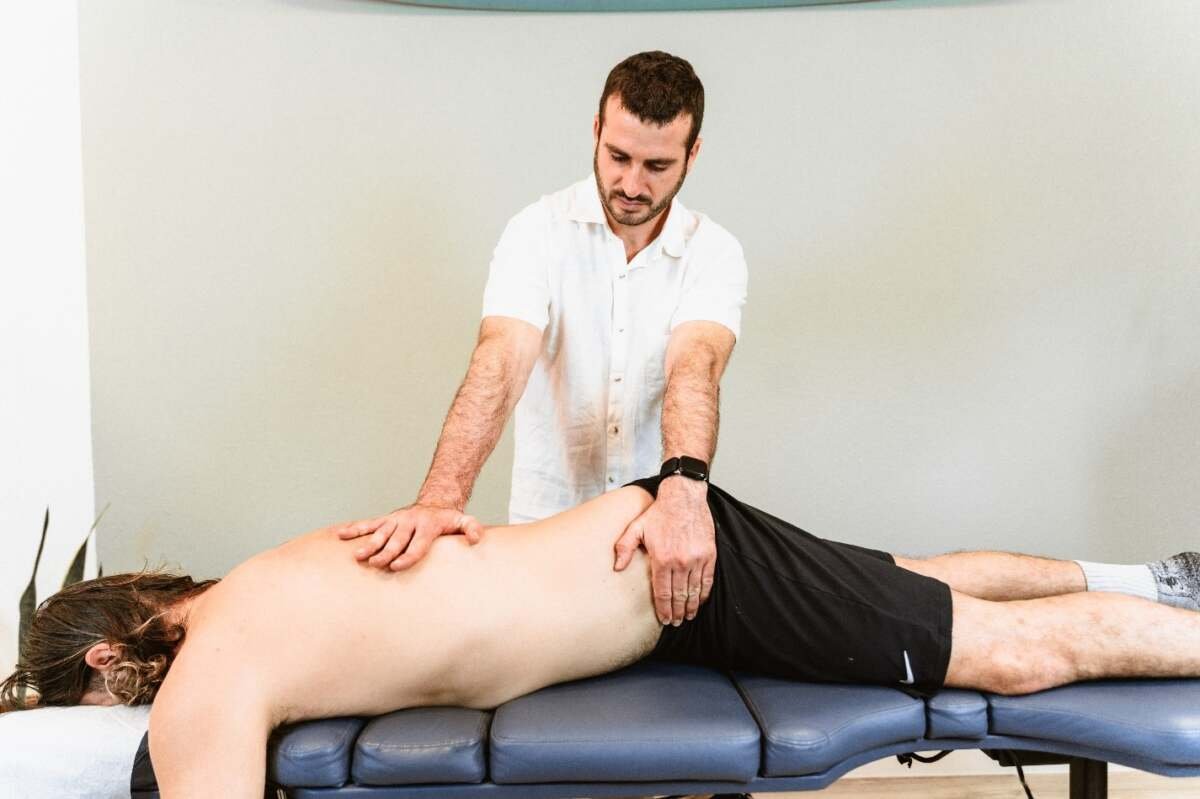
From there, care follows our Offload → Rebuild → Reeducate approach. If a stiff ankle, sore hip or painful knee is limiting you, we use chiropractic adjustments and joint mobilization along with soft tissue work to restore motion. Then we build a personalized rehab exercise program that progresses your balance and strength week by week, so you leave each visit knowing exactly what to practice at home.
We see patients in the clinic in Campbell, and for people who would rather not drive, our mobile chiropractic house calls bring the assessment to your living room, which has the bonus of letting us check the stairs, rugs and lighting you actually live with. Here’s how a mobile chiropractor visit works from booking to treatment.
When to See a Doctor First
Balance exercises are for general unsteadiness. See your physician before starting, or promptly, if you have:
- Sudden dizziness, spinning (vertigo), double vision, slurred speech, facial droop or weakness on one side. These can be stroke signs: call 911.
- A fall with a head strike, especially if you take blood thinners.
- Fainting or near-fainting when you stand up.
- New numbness, tingling or burning in your feet, or loss of bladder or bowel control.
- Two or more falls in the past year, or unsteadiness that started after a new medication.
- Known osteoporosis with a recent fall or new back pain.
Key Takeaways
- Balance is a trainable skill, and it fades after 50 if you don’t practice it.
- Test yourself: aim for at least 10 seconds on each leg, and retest every two weeks.
- Ten minutes a day at the kitchen counter covers the essentials: narrow stance, single-leg holds, heel raises, sit-to-stands and head turns.
- Progress one variable at a time: less support, softer surface, eyes closed, then distractions.
- Pair balance work with strength training for the best protection against falls.
FAQ
How long should I be able to stand on one leg after 50?
In one study of healthy adults, people in their 50s averaged roughly 37 to 41 seconds with eyes open, people in their 60s about 27 to 32 seconds, and people in their 70s about 15 to 21 seconds. A more practical floor is 10 seconds on each leg. If you can’t reach that, it’s worth starting a daily balance routine and getting checked.
How often should I do balance exercises?
Short daily sessions work better than one long weekly session, because balance is a skill your nervous system learns through repetition. Ten minutes a day, or at least three or four days a week, is a realistic target. Retesting every two weeks shows you whether it’s working.
Can you improve balance at 60 or 70?
Yes. Balance responds to training at any age, and research on adults over 60 shows that balance and functional exercise programs reduce the rate of falls. Progress may be slower than at 40, but the same principle applies: practice slightly beyond what feels easy, safely, and often.
Is walking enough to improve balance?
Walking is great for your heart, joints and mood, but it rarely challenges balance enough to improve it. Balance improves when you practice positions that are a little unstable, like a narrow stance, standing on one leg or turning your head while standing. Pair your walks with a few minutes of targeted balance work.
If your self-test scores worried you, or you’d like a plan built around your joints and history, book your initial evaluation or call (408) 641-0739. If getting to the clinic is hard, ask about our mobile visits in Campbell, Los Gatos, Saratoga, Cupertino, San Jose and Santa Clara.
Written by Dr. Orr Soffer, DC, chiropractor at The ChiropractOrr in Campbell, CA. This article is educational and not a substitute for an individual medical evaluation.