Lymphatic drainage massage works best for one specific problem: lymphedema, the chronic swelling that can follow cancer treatment or lymph node removal. For everyday puffiness, “detox,” or post-workout soreness, the evidence is thin. If your legs feel heavy after long flights or desk days, movement usually moves lymph better than a gentle massage alone.
By Dr. Orr Soffer, DC · Chiropractor in Campbell, CA
Below you’ll find what the research supports, where the social-media claims go too far, a five-minute routine you can do tonight for heavy legs, and the swelling signs that need a doctor before any massage.
What Is Lymphatic Drainage, and Why Is Everyone Talking About It?
Your lymphatic system is a network of thin vessels and nodes that collects extra fluid from your tissues and returns it to your bloodstream. Unlike blood, lymph has no heart pushing it. It moves mostly when the surrounding muscles contract, when you breathe deeply, and when the vessels themselves squeeze in small waves.
Manual lymphatic drainage (MLD) is a very light, rhythmic skin-stretching technique meant to encourage that flow toward working lymph nodes. It is not deep tissue work. Done properly, it feels more like slow, gentle strokes than a massage that digs into muscle.
Its popularity has exploded online, with claims that it flushes toxins, sculpts your face, speeds fat loss and boosts immunity. That gap between the clinical use and the marketing is what this post is about.
Does Lymphatic Drainage Work? What the Research Shows
The strongest research is in breast cancer-related lymphedema, and even there the benefit is modest. A Cochrane review of six trials (208 participants) found that intensive compression bandaging alone reduced arm swelling by roughly 30–37%. Adding MLD reduced swelling by only about 7% more, with a possibly larger benefit in mild-to-moderate cases. The trials were small, but MLD was safe and well tolerated.
A 2024 evidence summary in the British Journal of Community Nursing reached a similar conclusion: MLD is widely recommended for lymphedema, but the evidence on its effectiveness is inconsistent, and adding it may not always be necessary.
So the honest summary looks like this:
| Claim | What the evidence says |
|---|---|
| Reduces lymphedema swelling | Modest added benefit alongside compression, best studied after breast cancer treatment |
| Reduces short-term puffiness | Plausible and low risk, but mostly anecdotal |
| “Detoxes” the body | No good evidence; your liver and kidneys handle that |
| Causes fat loss or “sculpting” | No evidence; any change is temporary fluid shift |
| Speeds muscle recovery | Limited research; active recovery is better supported |
Even Cleveland Clinic’s overview notes that if you don’t have lymphedema, you may not see meaningful results, and that massage shouldn’t be your only treatment.
Why Do Some People Feel So Much Better After One?
People aren’t imagining it. A slow, light-touch session in a quiet room calms the nervous system, and that alone can ease tension and help you sleep. If you were lying down with your legs supported, some fluid also shifted simply because of position.
That relaxation is a real benefit. It’s just a different benefit than “draining toxins,” and it doesn’t need a pricey package of sessions to achieve. If what you enjoy is the calm, hands-on time, say so, and choose the session for that reason.
What Moves Lymph Better Than a Massage? A 5-Minute Heavy-Leg Reset
Because lymph depends on muscle contraction and breathing, the most reliable “drainage” tool you own is your own movement. This routine is useful after a long flight, a day of back-to-back meetings, or a drive over 17. It’s the same principle we use in active recovery workouts: gentle, rhythmic movement beats sitting still.
- Belly breathing, 1 minute. Lie on your back, one hand on your belly. Breathe in through your nose for 4 seconds so your belly rises, then out slowly for 6 seconds. Deep breathing changes pressure in your chest and abdomen, which helps lymph return.
- Legs up the wall, 1 minute. Scoot your hips close to a wall and rest your legs up on it, knees soft. Keep breathing slowly.
- Ankle pumps, 2 sets of 20. With legs still elevated, point your toes away, then pull them back toward you. Move through the full range, about one second each way. Your calves act as a pump for the lower legs. (Our ankle mobility routine builds on this if your ankles also feel stiff.)
- Heel raises, 2 sets of 15. Stand with a hand on a counter. Rise onto the balls of your feet for 2 seconds, lower for 2 seconds.
- Easy walk, 3–5 minutes. A loop around the block or the hallway. Swing your arms naturally.
Quick self-check: before you start, look at your sock line and press a fingertip into the front of your shin for a few seconds. Repeat after the routine. If the swelling is equal on both sides and eases with movement and elevation, it’s usually the ordinary end-of-day kind. If one leg is noticeably bigger, warm or painful, skip the routine and see the red flags below.
Who Should Skip Lymphatic Massage?
Light lymphatic work is low risk for most healthy people, but not for everyone. Cleveland Clinic advises avoiding it if you have blood clots or deep vein thrombosis, cellulitis or another active infection, a fever, heart disease, kidney failure, or a history of stroke. It also shouldn’t be done directly over cancerous tissue or radiation-damaged skin.
If you have lymphedema or are at risk after cancer treatment, work with your oncology team and a certified lymphedema therapist, who will usually combine MLD with compression, exercise and skin care. That’s a medical treatment, not a spa add-on.
How We Approach Swelling and Heavy Legs at The ChiropractOrr
We don’t offer lymphatic drainage as a lymphedema treatment, and we’ll refer you to the right specialist if that’s what you need. What we see often is the everyday version: stiff, heavy legs from sitting, swelling that lingers after an ankle sprain, or post-race soreness after a long run on the Los Gatos Creek Trail.
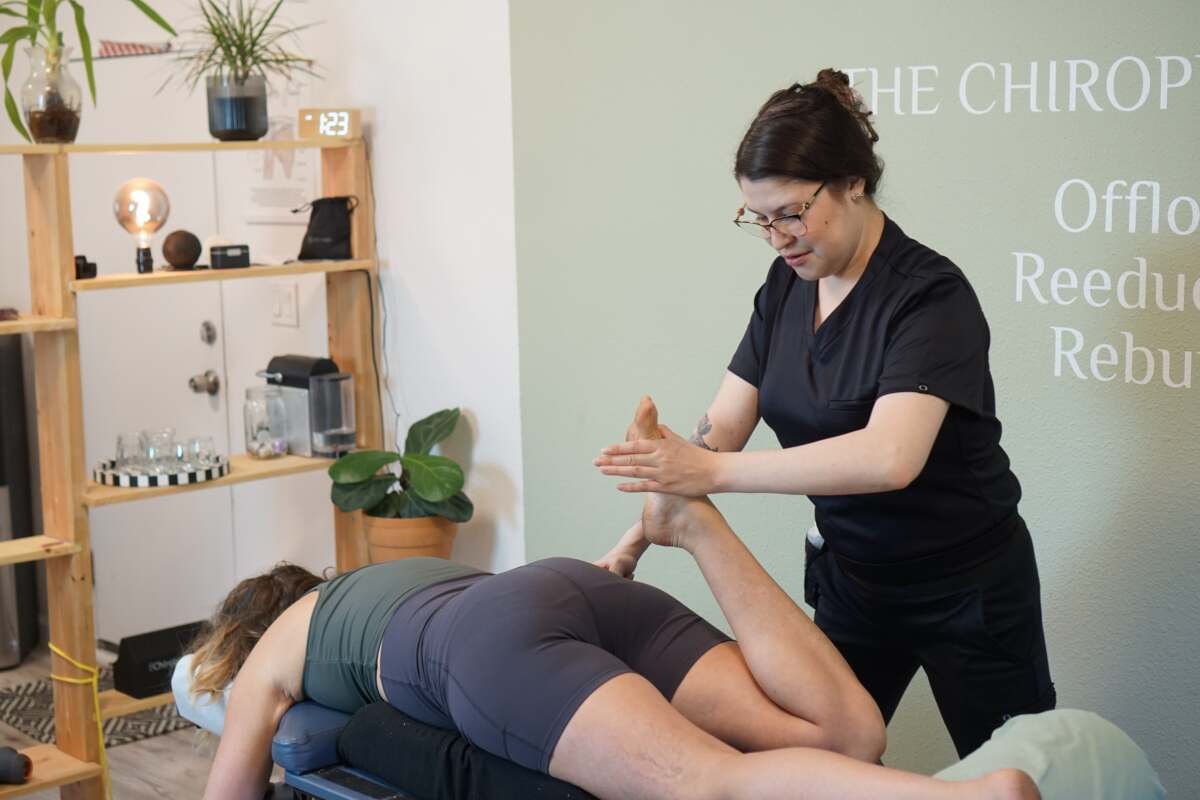
For those, we start with an exam to rule out anything that needs medical care first. Then we follow our Offload → Rebuild → Reeducate approach. Offload might mean hands-on clinically directed massage and assisted stretching to ease tight calves and hips, or targeted soft tissue therapy around an old injury. (If you’re unsure how that differs from a spa massage, we explain the difference between soft tissue therapy and deep tissue massage.)
Rebuild and Reeducate are where lasting change happens: a personalized rehab exercise plan that strengthens your calves and hips and builds movement breaks into your day. We take the same honest-evidence stance on other trends, like kinesiology tape. Visits happen in-clinic in Campbell, or we can come to you with mobile chiropractic visits.
When to See a Doctor First
Get medical care before any massage or exercise if you notice:
- Swelling in one leg or arm only, especially with warmth, redness, or calf pain (possible blood clot)
- Sudden shortness of breath or chest pain — call 911
- Red, hot, spreading skin with fever (possible infection)
- Swelling in both legs that’s new and worsening, with breathlessness or weight gain (heart, kidney or liver causes need checking)
- Swelling in an arm, leg or chest wall after cancer surgery or radiation
- A lump or swollen lymph node that’s hard, painless, or hasn’t gone down in a few weeks
Key Takeaways
- Manual lymphatic drainage has its best evidence in lymphedema, and even there it adds a modest benefit on top of compression.
- Claims about detox, fat loss and face sculpting aren’t supported by research.
- The relaxation people feel is real, and a fine reason to book a session if you enjoy it.
- Breathing, calf pumps, elevation and walking are free, reliable ways to move fluid out of tired legs.
- One-sided or sudden swelling needs a medical check before any massage.
FAQ
Is lymphatic drainage massage worth it if I don’t have lymphedema?
It can feel relaxing and may reduce short-term puffiness, but research on healthy people is limited. If you enjoy it, it’s generally low risk. If your goal is less swelling or faster recovery, regular movement and elevation are better supported and free.
Does lymphatic drainage remove toxins?
There’s no good evidence that it does. Your liver and kidneys filter waste from your body, and the lymphatic system returns fluid to your bloodstream on its own as you move and breathe. A massage may shift fluid temporarily, but it doesn’t “flush toxins.”
How can I drain my lymphatic system naturally?
Move regularly, breathe deeply from your belly, and break up long sitting with short walks or calf raises. Raising your legs for a few minutes at the end of the day also helps. If you have lymphedema, follow the plan from your lymphedema therapist, which often includes compression.
Who should not get a lymphatic drainage massage?
People with blood clots, active infections or cellulitis, fever, heart disease, kidney failure, or a history of stroke should avoid it unless their doctor approves. It also shouldn’t be done over cancerous tissue or radiation-damaged skin.
If heavy legs, lingering swelling after an injury, or post-workout stiffness keeps coming back, we’re happy to take a look. Book your initial evaluation or call (408) 641-0739. Can’t make it to Campbell? Ask about mobile visits and we’ll come to you.
Written by Dr. Orr Soffer, DC, chiropractor at The ChiropractOrr in Campbell, CA. This article is educational and not a substitute for an individual medical evaluation.