You can lower your odds of shin and knee pain at your first Turkey Trot by spending the next three weeks building up slowly: run-walk intervals three days a week, no more than about a 10% jump in weekly volume, two short strength sessions for calves and hips, and a simple pain check after every run.
By Dr. Orr Soffer, DC · Chiropractor in Campbell, CA
If you signed up for the Thanksgiving morning 5K with family or coworkers and haven’t run since last year’s, this is for you. Below you’ll find a 3-week plan, a 2-minute shin and knee self-check, and the strength moves that make the biggest difference for first-timers.
Why do first-time Turkey Trotters get shin and knee pain?
Bone, tendon and cartilage adapt to running more slowly than your heart and lungs do. A few weeks of training can make you feel fit enough to push, while the tissues in your lower legs are still catching up. That gap is where most first-race aches start.
The two we see most in November are shin splints (medial tibial stress syndrome) and runner’s knee (patellofemoral pain). Mayo Clinic lists starting a running program and quickly increasing how long, how often or how hard you exercise as key risk factors for shin splints. For runner’s knee, Cleveland Clinic points to weak or tight thigh muscles and rapid jumps in training, with pain that’s often worse on stairs, downhills and after sitting with bent knees.
Race morning adds its own twist: cold muscles, crowded starts, downtown concrete and the urge to keep pace with a faster cousin. If you already run regularly on the Los Gatos Creek Trail, our post on the aches we see most in Creek Trail runners covers the bigger picture. This one is for the person starting from close to zero.
How much should you run in the 3 weeks before Thanksgiving?
Less than you think. The goal isn’t to get fast by Thanksgiving. It’s to arrive with legs that tolerate 30–40 minutes of steady movement. A 2020 systematic review of shin splints in novice and recreational runners found that one included study linked weekly distance jumps of more than 30% to more shin splints, so keep your increases small and steady.
Here’s a run-walk plan for a 5K. Run at a pace where you can still speak in full sentences.
| Week | 3 sessions per week | Plus |
|---|---|---|
| Week 1 (now) | 5-min brisk walk, then 6 rounds of 1 min easy run + 2 min walk | 2 strength sessions (below) |
| Week 2 | 5-min walk, then 6 rounds of 2 min run + 1 min walk | 2 strength sessions |
| Week 3 | 5-min walk, then 5 rounds of 4 min run + 1 min walk; last run 2 days before the race | 1 strength session, early in the week |
Leave at least one day between runs. If you miss a session, don’t double up. Just pick up where you left off. And if you are already running comfortably for 20 minutes, start at Week 2 rather than adding extra miles.
The 2-minute shin and knee self-check
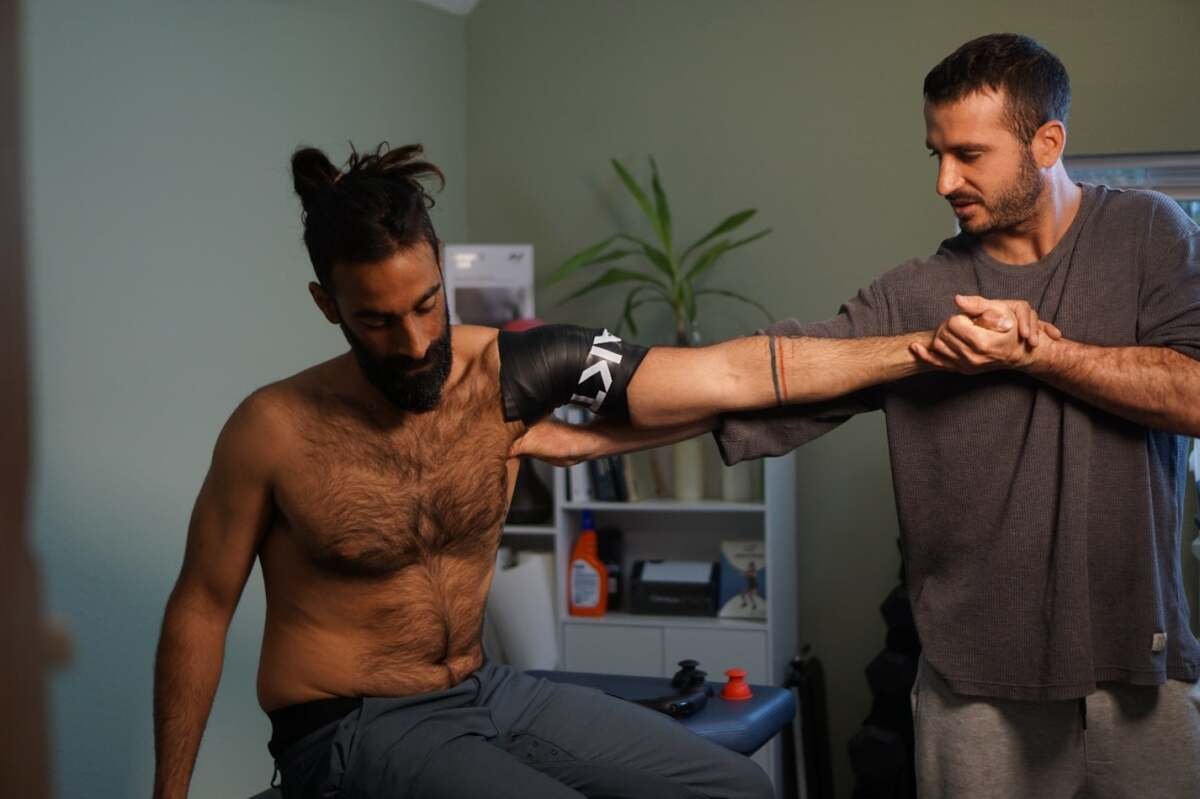
Do this the morning after each run. It tells you whether to keep going, hold steady or back off.
- Shin press: Run your thumb down the inside edge of each shinbone. Mild, spread-out tenderness over several inches is common early on. A single sore spot that makes you wince is not.
- Stair test: Walk down one flight of stairs. Note any ache around or behind the kneecap on a 0–10 scale.
- Single-leg sit-to-stand: From a chair, stand up on one leg 5 times per side. Watch whether your knee drifts inward and whether it hurts.
- Hop check: Only if steps 1–3 were pain-free or close to it, hop gently on one leg 10 times per side.
How to read it: 0–3 out of 10 that settles within 24 hours means continue the plan. A 4–5, or pain that’s worse the next morning, means repeat the current week instead of progressing. Sharp, pinpoint shin pain, or pain with hopping, means stop running and get it checked. That pattern can point to a bone stress injury rather than simple soreness.
Which strength moves protect your shins and knees?
Two 12-minute sessions a week, on non-running days or after an easy run, cover most of what a beginner needs. These are the same building blocks we use in a personalized rehab exercise program, scaled down for race prep.
- Calf raises (straight knee): 3 sets of 15, slow up and 3 seconds down. Progress to single-leg when two-leg feels easy. Your calves absorb a large share of landing force, which takes load off the shin.
- Bent-knee calf raises: 2 sets of 15 with knees slightly bent to load the deeper soleus muscle.
- Step-downs: Stand on a low step, slowly lower the other heel to tap the floor, 3 sets of 8 per side. Keep the kneecap pointing over your second toe. This trains the exact control runner’s knee lacks.
- Side-lying leg raises or side plank: 2 sets of 12 per side, or 2 x 20-second side planks. Stronger hips help keep the knee from caving in.
- Toe walks and heel walks: 2 x 20 steps each, a quick way to wake up the muscles along the front of the shin.
If your ankles feel stiff in the deep part of a squat, add our 10-minute ankle mobility routine. Tight hips? The hip mobility stretches for active adults pair well with this plan.
What should you do on race morning?
- Wear shoes you’ve already run in. Race day is not the day for new shoes. Mayo Clinic suggests replacing running shoes every 350 to 500 miles.
- Warm up for 8–10 minutes. Brisk walking, leg swings, 10 calf raises, 10 bodyweight squats and two 20-second easy jogs. Thanksgiving mornings in San Jose are often cold, and cold tissue is stiffer.
- Start at the back. Crowded starts pull first-timers into a pace they can’t hold. Run-walk the way you trained.
- Shorten your stride on downhills and concrete. Quicker, lighter steps reduce the braking load on your knees and shins.
- Walk the next day. A 20-minute easy walk on Friday usually beats lying on the couch for recovery.
Some people ask about taping for race day. Our post on whether kinesiology tape works explains what it can and can’t do. In short, it doesn’t replace strength or sensible training.
How We Treat Shin and Knee Pain in Runners at The ChiropractOrr
When a runner comes in three weeks before a race, we start with an exam: where it hurts, how it behaves, and how you move. We watch a single-leg squat, a step-down and, when appropriate, a short jog or hop. We also check the ankle, hip and lower back, because stiffness or weakness above or below the sore spot often explains why it’s overloaded.
From there we follow our Offload → Rebuild → Reeducate approach. Offload might mean trimming your run-walk ratio for a week rather than stopping completely, plus soft tissue therapy for irritated calf and shin muscles. Where joint restriction in the ankle, knee or hip is limiting motion, a chiropractic adjustment can help restore it. Rebuild is the strength work above, progressed to your level. Reeducate means cueing stride length and cadence so the change sticks on race day.
We see runners in-clinic in Campbell, and we offer mobile chiropractic visits across Los Gatos, Saratoga, Cupertino and San Jose if getting in is hard during the holiday rush.
When to See a Doctor First
Skip the self-care plan and get medical care promptly if you notice:
- Sharp, pinpoint pain on the shinbone, pain that wakes you at night, or pain when hopping. These can signal a stress fracture.
- A knee that swells quickly, locks, gives way or can’t fully straighten.
- Calf pain with swelling, warmth or redness, especially after travel. This can be a blood clot.
- Numbness, tingling, or a tight, painful calf that doesn’t ease after you stop running.
- Chest pain, trouble breathing or fainting during exercise. Call 911.
Key Takeaways
- Three weeks is enough to prepare for a 5K if you build slowly with run-walk intervals.
- Small, steady increases matter more than total mileage for avoiding shin splints.
- Calf raises, step-downs and hip work twice a week protect both shins and knees.
- Use the morning-after self-check: pain at 0–3 that settles in 24 hours is fine; sharp, pinpoint or worsening pain is not.
- On race day, start at the back, shorten your stride and stick with the shoes you trained in.
FAQ
Can I train for a Turkey Trot in 3 weeks?
Yes, most healthy adults can prepare to run-walk a 5K in three weeks. Use run-walk intervals three times a week, add strength work for your calves and hips, and keep your increases small. The goal is to finish comfortably, not to set a personal record.
Should I run through shin splints before a race?
Mild, diffuse soreness that fades within a day usually allows you to keep training at the same level. Sharp, pinpoint pain on the bone, pain that worsens each run, or pain when hopping means stop and get evaluated. Running through those signs can turn a minor problem into a stress fracture.
Is it better to walk or run a Turkey Trot if my knees hurt?
Walking or run-walking is a perfectly good way to complete a Turkey Trot, and it places less load on irritated knees. If stairs or downhills already hurt, walk the downhill sections and keep steps short. Get the knee checked if pain lingers for more than a couple of weeks.
What is the best warm-up before a 5K?
Spend 8 to 10 minutes moving: brisk walking, leg swings, calf raises, bodyweight squats and a couple of short, easy jogs. A gradual warm-up matters more on cold mornings. Save static stretching for after the race.
If your shins or knees are already grumbling, there’s still time to sort it out before Thanksgiving. Book your initial evaluation or call (408) 641-0739. Can’t make it to Campbell? Ask about mobile visits and we’ll come to you.
Written by Dr. Orr Soffer, DC, chiropractor at The ChiropractOrr in Campbell, CA. This article is educational and not a substitute for an individual medical evaluation.