Senior dogs often get stiffer when temperatures drop because they move less, lose muscle support, and slip more on cold or wet surfaces. A warm bed, a short indoor warm-up before walks, grippy floors, steady weight and shorter, more frequent walks can make winter mornings easier. Sudden lameness or wobbling needs a vet first.
By Dr. Orr Soffer, DC · Chiropractor in Campbell, CA
If your dog takes an extra few seconds to stand up on frosty mornings, or hesitates at the car door the way they didn’t last spring, this one is for you. Below you’ll find a 5-minute morning warm-up, a winter home checklist, and the red flags that mean your vet should see your dog first.
Why Do Older Dogs Get Stiffer When It’s Cold?
Nobody has fully explained why cold weather makes arthritic joints feel worse, in dogs or in people. What we do know is practical: in winter, dogs tend to get less exercise, spend more time lying on cold floors, and walk on surfaces that are harder to grip. All three add up to stiffer starts.
Age matters too. Cornell’s Riney Canine Health Center notes that older dogs can have a harder time regulating body temperature, and that dogs with arthritis often struggle in winter because slick surfaces make them unstable. A dog who doesn’t trust their footing moves more cautiously and less often, which feeds the stiffness.
Here in Campbell and around Los Gatos and Saratoga, we don’t deal with much snow. Our version is frosty lawns at 7 a.m., rainy-week mud, and wet paws hitting tile or hardwood floors. For an older dog, that slippery kitchen floor can be the riskiest surface of the day.
How Can You Tell If Your Dog Is Stiff or Actually in Pain?
Dogs rarely complain out loud. Instead, they change how they move. Watch for these in the first ten minutes after your dog wakes up:
- Several attempts or a “rocking” motion to get up
- Sitting with one hind leg kicked out to the side
- Stopping at stairs, the couch or the car instead of jumping
- A shorter stride or bunny-hopping with both back legs
- Licking at one wrist, elbow or knee
- Restlessness at night or trouble getting comfortable
Stiffness that warms out of the joints within a few minutes is common in older dogs with arthritis. Stiffness that doesn’t improve, gets worse week to week, or comes with yelping or a limp needs a veterinary exam. Our guide to signs your dog may need a spinal check covers more movement changes worth noting.
The 5-Minute Morning Warm-Up for a Stiff Senior Dog
Think of this as the dog version of not sprinting out of bed. It’s gentle, it’s free, and it fits between waking up and the first walk. Skip any step your dog clearly dislikes, and get your vet’s okay first if your dog has a diagnosed joint or spine condition.
- Start warm. Let your dog get up from a padded bed rather than bare tile. If they slept by a drafty door, move the bed for next time.
- Calm strokes, 1–2 minutes. With a flat palm, stroke slowly from the neck along both sides of the spine to the hips, then down the thighs and shoulders. Light pressure only, like smoothing a blanket. Stop if your dog tenses, turns toward your hand or moves away.
- Indoor “sniff walk,” 2 minutes. Leash on, walk slowly through the hallway or yard on a rug or grass. Let them sniff. You’re simply letting the joints and muscles warm up before the real walk.
- Two wide figure eights. Walk a slow, wide figure eight twice. Wide turns encourage gentle weight shifting without twisting. Keep the loops big enough that your dog never pivots sharply.
- Then the main walk, shorter and more often. Two or three 10–15 minute walks are usually kinder than one long one. Pick grass or packed dirt over gravel and wet rocks, and turn around if your dog starts lagging.
Massage research in dogs is still thin, so treat step 2 as comfort and bonding rather than treatment. The walking part has firmer footing. A 2022 review in Veterinary Sciences on canine osteoarthritis rehab recommends regular, low-impact walking as a foundation, while acknowledging that dog-specific evidence for most physical therapies is still limited.
What Home Changes Help a Stiff Dog Most in Winter?
That same review puts environmental changes at the base of its “physiotherapy pyramid,” meaning they come before anything fancier: grippy flooring, ramps instead of jumps, and raised bowls. They’re cheap, quick and often overlooked. Run through this checklist this weekend:
| Area | What to change | Why it helps |
|---|---|---|
| Floors | Runners or rubber-backed mats on tile and hardwood paths, especially by the door | Grip builds confidence and reduces slips |
| Bed | Thick orthopedic bed away from drafts; optional low-wattage pet heating pad your dog can step off | Easier, warmer first steps |
| Car and couch | A ramp or step instead of jumping | Removes a high-impact moment of the day |
| Bowls | Raise food and water slightly for larger dogs | Less bending through sore front legs and neck |
| Walks | A coat for thin-coated dogs; towel-dry paws and legs after rainy walks | Keeps muscles warm and wet paws from slipping indoors |
| Nails and paw hair | Keep nails short and fur between pads trimmed | Better traction on smooth floors |
Does Your Dog’s Weight Really Matter for Stiff Joints?
Yes, and winter is when the pounds sneak on. Cornell points out that many dogs exercise less in the colder months and may need fewer calories to avoid weight gain. Fewer walks plus the same scoop of food is an easy recipe for extra load on aching joints.
The payoff from modest changes can be meaningful. In a study of obese dogs with hip or elbow osteoarthritis, lameness improved significantly once dogs had lost about 6% of their body weight. Ask your vet for your dog’s body condition score and a safe target before changing food, especially for older dogs with other health issues.
How We Support Senior Dogs at The ChiropractOrr
Our animal chiropractic care starts with your veterinarian. California requires a veterinary referral before we work on an animal, and that’s how we want it: your vet diagnoses and manages medical issues, and we add hands-on, movement-focused care alongside that plan.
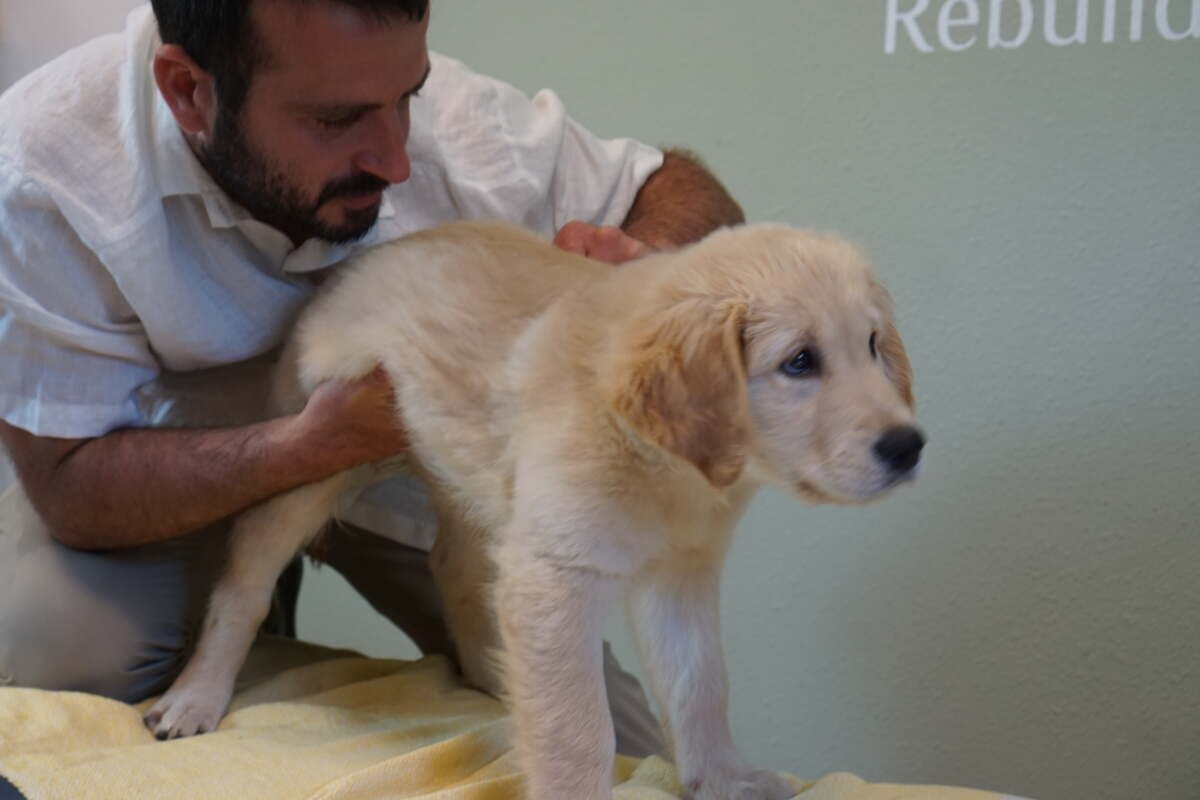
At a visit, Dr. Orr watches your dog walk, turn and sit, then gently checks how the spine, hips and shoulders move. Care for an older dog is low-force and patient: gentle adjustments or mobilization where appropriate, soft tissue work on guarding muscles, and a short home plan like the warm-up above. You can read more about chiropractic and soft tissue therapy for dogs and chiropractic for senior dogs with mobility loss.
We’re honest about the evidence: research on chiropractic for dogs is limited, and it works best as one piece of a broader plan that includes pain control from your vet, weight management and regular movement. For dogs who find car rides stressful, ask whether a mobile house-call visit makes sense.
When to See a Vet First
Skip home care and call your veterinarian, or an emergency vet after hours, if your dog has:
- Sudden refusal to put weight on a leg, or crying out when moving
- Wobbling, dragging toes, knuckling paws or weakness in the back legs
- Loss of bladder or bowel control
- A hot, swollen joint, fever or loss of appetite
- Shivering, lethargy or weakness after time in the cold
- Stiffness after a fall, slip or rough play that isn’t easing within a day
Some of these can signal disc problems, fractures or infection that need medical care quickly.
Key Takeaways
- Cold mornings, less exercise and slippery floors combine to make senior dogs stiffer in winter.
- A 5-minute indoor warm-up and shorter, more frequent walks are easy places to start.
- Rugs, ramps, warm bedding and trimmed nails often help more than any gadget.
- Keeping your dog lean matters; modest weight loss has been linked to less lameness in obese dogs with arthritis.
- Animal chiropractic in California requires a vet referral and should complement, not replace, veterinary care.
FAQ
Why is my senior dog stiffer in cold weather?
Researchers still debate exactly why, but many arthritic dogs move less in winter, lose some muscle support, and struggle more on cold, slick ground. Older dogs also have a harder time staying warm. The result is a dog who is noticeably slower to get going on chilly mornings.
Should I still walk my arthritic dog in winter?
Usually yes. Regular, low-impact walking helps maintain strength and keeps joints moving. Go shorter and more often, choose grass over gravel or wet rocks, warm up indoors first, and cut the walk short if your dog starts lagging or limping.
Can a chiropractor adjust my dog without a vet?
Not in California. Animal chiropractic requires a referral from your dog’s veterinarian, and it should always work alongside veterinary care, never replace it. Your vet rules out problems like fractures, infections or disc disease that need medical treatment first.
Does a heated dog bed help with arthritis?
Warm, supportive bedding can make getting up easier for many stiff dogs. Choose a low-wattage pet-specific heated pad or a self-warming orthopedic bed, make sure your dog can move off the heat, and check the surface temperature with your hand.
How do I know if my old dog is in pain or just slowing down?
Slowing down with age is common, but these are often pain signs: reluctance to jump or climb, sitting with a leg kicked out, licking one joint, restlessness at night, or snapping when touched. If you notice them, book a vet exam rather than assuming it’s just age.
If your senior dog is slowing down this winter and your vet agrees hands-on care could help, we’d be glad to meet you both. Book your initial evaluation or call (408) 641-0739 to talk through the referral process. Mobile visits are available for dogs and owners who can’t easily come in.
Written by Dr. Orr Soffer, DC, chiropractor at The ChiropractOrr in Campbell, CA. This article is educational and not a substitute for an individual medical or veterinary evaluation.