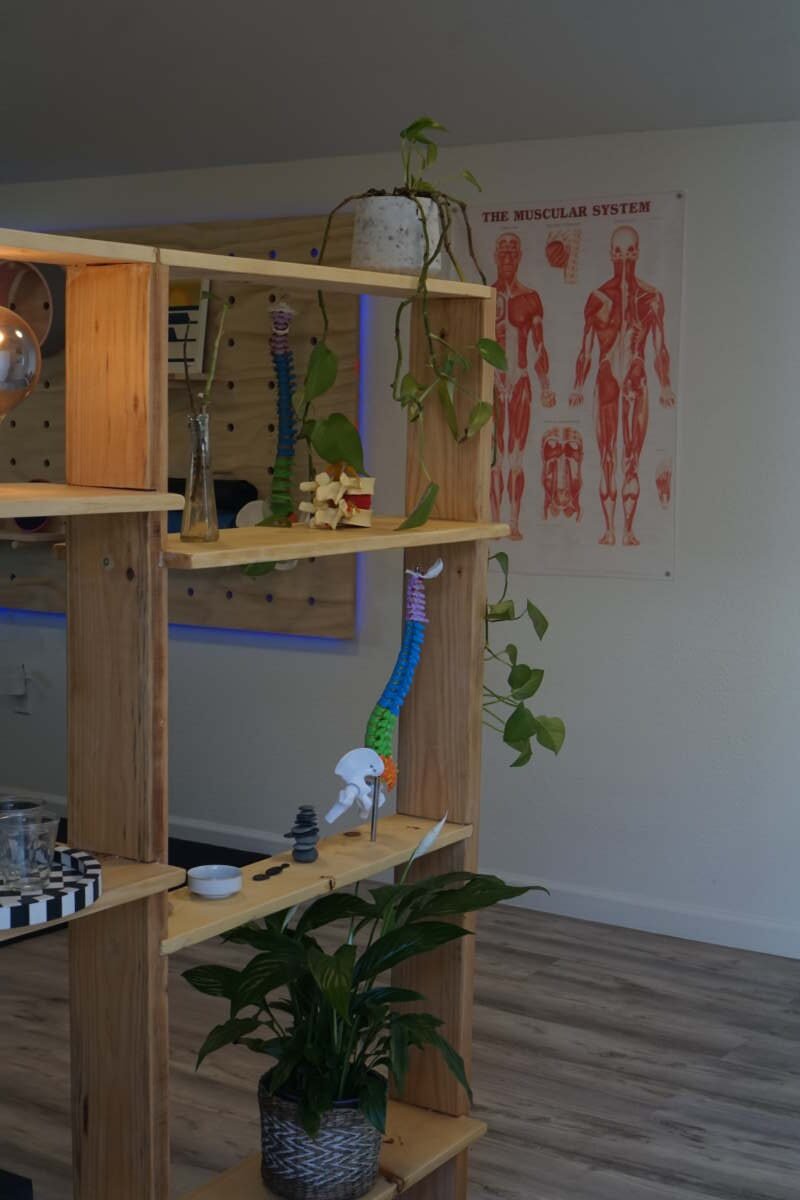
Yes chiropractic care directly addresses the spinal misalignments, muscle imbalances, and postural dysfunction caused by prolonged desk sitting. Through evidence-based adjustments, soft tissue therapy, and corrective exercises, chiropractors restore proper spinal mechanics while teaching sustainable habits that prevent recurrence. Office workers experience measurable relief as treatment targets the root biomechanical failures rather than masking symptoms, creating lasting improvements in mobility and comfort during work hours.
Why Sitting All Day Destroys Your Lumbar Spine Alignment
The human spine simply wasn’t designed for eight-plus hours of static flexion in a chair. When you sit, your lumbar spine shifts from its natural lordotic curve into a flexed position that loads the intervertebral discs unevenly. This creates what researchers call “creep” a progressive deformation of spinal tissues that accumulates throughout the workday and compounds over years of desk work.
Many patients ask can chiropractic care help with lower back pain from sitting at a desk all day without understanding why the pain develops in the first place. The answer lies in biomechanics. Static sitting causes anterior pelvic tilt, which flattens the lumbar curve and transfers load from the muscles to the passive structures of the spine. The posterior longitudinal ligament stretches beyond its elastic tolerance, while the facet joints compress under abnormal loading patterns.
By 2026, occupational health research shows that desk workers in flexed sitting positions experience significantly higher rates of disc derangement compared to those with neutral spine postures. The creep effect becomes permanent without intervention, creating a cycle where the damaged tissues cannot support proper alignment, which causes further tissue damage. Effective desk posture correction breaks this cycle by restoring mechanical function before permanent adaptation occurs.
- Loss of lumbar lordosis The natural inward curve reverses, loading posterior disc fibers
- Anterior pelvic tilt Hip flexors shorten chronically while gluteals weaken
- Disc pressure increase Intradiscal pressure rises significantly in flexed sitting positions
- Facet joint compression Posterior elements bear abnormal load during sustained flexion
- Muscle recruitment dysfunction Paraspinal muscles deactivate and gluteals become inhibited
The tissue adaptation happens gradually, which makes it easy to ignore until pain signals become constant. Your body compensates initially by recruiting accessory muscles, but these compensation patterns eventually fail under cumulative stress. TheSolution requires targeted posture correction that addresses both the mechanical dysfunction and the muscular imbalance pattern.

Quick Answer: The Three Ways Chiropractic Care Reverses Desk-Related Back Pain
Chiropractic intervention targets sedentary back pain treatment through three distinct mechanisms that work together to restore spinal function. Understanding these pathways helps patients commit to their treatment protocol while recognizing why symptom-focused approaches often fail.
First, spinal adjustments restore joint mobility where hypomobile segments have become restricted. When vertebrae lose their normal range of motion, adjacent segments compensate by moving too much, creating instability and inflammation. Chiropractic manipulation addresses these restrictions directly, allowing the spine to move through its full functional range again.
Second, soft tissue therapy releases the myofascial restrictions that maintain poor posture. Tight hip flexors, shortened hamstrings, and adaptive contracture of the thoracolumbar fascia all pull the spine into flexed positions even when you’re standing. Manual therapy reverses these tissue changes over a series of visits.
Third, corrective exercise prescriptions reactivate muscles that have become inhibited through prolonged sitting. The gluteals and deep core stabilizers essentially “forget” how to fire when you sit all day, forcing compensatory muscle recruitment that perpetuates biomechanical dysfunction. Targeted exercises restore proper motor control through neuroplasticity.
| Factor | Chiropractic Intervention | Conventional Pain Management |
|---|---|---|
| Primary Focus | Biomechanical dysfunction and tissue adaptation | Symptom suppression |
| Treatment Target | Joint, muscle, and nervous system integration | Isolated pain signals |
| Long-Term Outcome | Corrected mechanics and prevention of recurrence | Temporary relief without addressing cause |
| Functional Improvement | Restored mobility and motor control | Limited to pain reduction |
| Prevention Strategy | Ergonomic education and exercise prescription | Rarely addressed |
Patients seeking natural lower back pain relief often find that chiropractic care provides sustainable improvement because it treats why the pain developed rather than just muting symptoms. The integrated approach acknowledges that office worker spine health requires both hands-on treatment and behavioral modification.

The Sitting-Induced Biomechanical Cascade [2026 Research Analysis]
Modern occupational health research has mapped the precise sequence of tissue adaptation that occurs from prolonged sitting. The cascade begins almost immediately upon sitting, when the psoas muscle shortens and pulls the lumbar spine forward. Within twenty minutes, the lumbar discs experience measurable creep deformation. By two hours, muscle activity in the paraspinals decreases significantly as the passive structures take over load-bearing.
This represents what clinicians call sitting-induced lumbar pain a distinct clinical entity from acute injury or degenerative conditions. The pain develops from cumulative microtrauma to tissues that never get a chance to recover. Unlike a sports injury where tissue damage happens in a single event, desk-related damage accumulates through thousands of small insults throughout each workday.
The physiological changes extend beyond the spine itself. Prolonged sitting reduces blood flow to the muscles of the lower back, impairing nutrient delivery and waste removal. Discs rely on fluid exchange through movement, so static positioning literally starves them of the nutrition they need for repair. Meanwhile, elevated cortisol from sustained stress further compromises tissue healing.
A 2025 systematic review in the Journal of Occupational Rehabilitation found that workers who sat for more than six hours daily had significantly higher odds of reporting chronic lower back pain compared to those with more varied postures, even after controlling for physical activity levels outside work hours.
The cascade progresses through predictable stages. Initially, discomfort resolves with movement. Then discomfort persists into evenings. Eventually, morning stiffness and pain become constant. At each stage, the treatment required intensifies. Early intervention through workplace ergonomic therapy can reverse early stages completely, while advanced cases require more extensive rehabilitation.
Research published in 2026 confirms that prolonged sitting spinal stress creates measurable changes in disc hydration and muscle fiber composition. Type I muscle fibers responsible for endurance postural control gradually convert to more fatigable fiber types, making it harder to maintain proper alignment even when you try. This explains why simply “sitting up straight” fails as a strategy the postural muscles literally cannot sustain the effort.
Understanding this cascade clarifies why effective treatment must address multiple systems simultaneously. ergonomics and posture resources provide the educational foundation, but hands-on intervention remains necessary to reverse established tissue adaptation.
How Chiropractors Diagnose and Measure Your Desk Posture Dysfunction
Accurate diagnosis forms the foundation of effective treatment. At The ChiropractOrr, every examination begins with a comprehensive history that identifies not just your symptoms, but the specific postures and activities that provoke them. This contextual approach recognizes that computer posture syndrome manifests differently depending on your work setup, body type, and movement history.
Postural analysis provides objective baseline measurements. Your chiropractor assesses standing posture from multiple angles, noting head position relative to shoulders, shoulder position relative to pelvis, and pelvic tilt relative to neutral. These measurements establish your starting point and guide treatment priorities. A forward head carriage of more than two inches typically correlates with significant upper cervical dysfunction, while anterior pelvic tilt beyond fifteen degrees indicates lumbar involvement.
Motion palpation identifies specific segmental restrictions that limit spinal mobility. The chiropractor guides your spine through its ranges while palpating each joint, feeling for areas that don’t move properly. These hypomobile segments often correspond exactly to areas of pain complaint, revealing the mechanical source of symptoms that imaging studies might miss.
- Digital postural photography Objective measurement of alignment deviations
- Motion palpation assessment Hands-on evaluation of segmental joint mobility
- Orthopedic testing Provocative maneuvers that reproduce symptoms
- Neurological screening Assessment of reflexes, sensation, and motor function
- Muscle length testing Identification of tight or shortened muscle groups
- Functional movement screening Observation of basic movement patterns
For patients seeking lower back pain treatment, this comprehensive diagnostic approach ensures that nothing gets missed. Many patients discover that their pain, while felt in the lower back, actually originates from dysfunction in the hips, thoracic spine, or even the cervical region. Treating the pain location without identifying the primary driver rarely produces lasting results.
The Evidence-Based Treatment Protocol for Office Workers at The ChiropractOrr
Treatment planning at The ChiropractOrr reflects the scientific understanding that occupational back discomfort requires integrated care. No single intervention adequately addresses the multi-system dysfunction that develops from years of desk work. Instead, your chiropractor combines three evidence-based approaches into a cohesive treatment protocol personalized to your specific findings.
Spinal manipulation restores joint mobility where restrictions have developed. These adjustments use precise force in specific directions to improve motion at dysfunctional segments. The immediate effect includes pain relief, but the longer-term benefit comes from restored mechanical function that allows proper loading of spinal tissues. Your body can finally move the way it was designed to move.
Soft tissue therapy addresses the myofascial component of dysfunction. Techniques including myofascial release, trigger point therapy, and instrument-assisted soft tissue mobilization break up adhesions and restore normal tissue flexibility. This work often produces the most noticeable immediate change, as patients feel their posture improve from released tissue tension.
According to clinical guidelines from the American College of Physicians, nonpharmacologic treatments including spinal manipulation should be the first-line approach for acute and subacute lower back pain, particularly when mechanical dysfunction is identified as the primary driver.
Corrective exercise prescription ensures that improvements become lasting changes. Your chiropractor teaches specific exercises that reactivate inhibited muscles, strengthen weak areas, and reinforce proper movement patterns. These aren’t generic exercises they’re selected based on your examination findings and progressed as your function improves. The goal is establishing new motor patterns that persist under the demands of daily work.
Before beginning care, patients often wonder what to expect. what to expect from chiropractic care varies based on individual presentation, but most office workers begin with a concentrated treatment phase addressing acute symptoms, then transition to maintenance care that prevents recurrence. Treatment frequency decreases as function improves, eventually reaching a schedule that maintains progress with periodic check-ins.
Step-by-Step: Implementing Your Chiropractor’s Desk Ergonomic Corrections
Your chiropractor’s in-office treatment works best when supported by proper workplace setup. Workplace ergonomic therapy extends the benefits of hands-on care by reducing the daily stress that originally caused dysfunction. These specific adjustments create a workstation that supports spinal health during your longest waking hours.
Monitor positioning determines your head and neck posture throughout the day. The top of your screen should sit at or slightly below eye level, encouraging a neutral neck position. When monitors sit too low, the head translates forward, creating upper cervical extension that perpetuates forward head posture. This single change often reduces upper back tension significantly for desk workers.
Chair height and positioning affect your lower back directly. Your feet should rest flat on the floor with your knees bent at approximately ninety degrees. The chair seat shouldn’t press into the backs of your knees, which compresses circulation. Your pelvis should sit back against the chair back with lumbar support positioned at your belt line, maintaining the natural inward curve of your lower spine.
When considering chronic pain management strategies, ergonomic optimization provides an essential foundation. Even the best treatment outcomes cannot persist if you return daily to a workstation that stresses your tissues. Making these changes is an investment in your long-term spinal health.
- Position monitor top at eye level Measure from floor to seated eye height, then place screen top at this level
- Set monitor distance at arm’s length Full arm extension from seated position determines optimal distance
- Adjust chair height for ninety-degree knees Feet flat, thighs parallel to floor, pressure distributed evenly
- Position keyboard at elbow height Shoulders relaxed, elbows at ninety degrees, wrists neutral
- Place mouse adjacent to keyboard Same height, eliminates reaching that strains shoulders
- Set lumbar support at belt line Supports natural inward curve without pushing spine forward
- Position frequently used items within arm’s reach Reduces repetitive twisting and reaching throughout day
Beyond stationary setup, movement throughout the workday prevents the tissue creep that accumulates during static positioning. Even perfect ergonomics cannot eliminate the need for regular postural breaks. Your chiropractor will recommend a movement schedule based on your specific situation.
Key Takeaways: What Office Workers Need to Know About Chiropractic Relief
Understanding what chiropractic care offers helps you make informed decisions about your treatment. The evidence consistently shows that manual therapy combined with exercise prescription produces meaningful improvement in sitting-induced lumbar pain, often outperforming medication and passive modalities that ignore the mechanical causes of discomfort.
Treatment timelines vary based on how long dysfunction has existed. Acute problems that developed recently typically respond faster than chronic conditions that have existed for years. However, even long-standing dysfunction can improve significantly with consistent care. Your chiropractor will set realistic expectations based on your examination findings during your initial consultation.
Prevention remains simpler than treatment. Addressing minor discomfort before it becomes constant pain always requires less intervention. Regular chiropractic check-ins, even when you feel fine, catch developing dysfunction before it produces symptoms. This proactive approach represents the future of occupational health maintenance.
- Early intervention matters Tissue adaptation becomes harder to reverse the longer it persists
- Integrated treatment works best Adjustments plus soft tissue therapy plus exercise outperform any single approach
- Ergonomics amplify results Workplace optimization extends treatment benefits into your daily routine
- Movement is essential Even perfect posture becomes problematic when held statically
- Maintenance prevents recurrence Periodic check-ups catch dysfunction before symptoms return
For patients considering spinal decompression treatment options, chiropractic care often provides effective relief without more invasive interventions. The conservative approach addresses mechanical dysfunction through natural means, working with your body’s inherent healing capacity rather than overriding it.
Frequently Asked Questions About Chiropractic Care for Desk-Related Back Pain
How many chiropractic sessions do office workers typically need for sitting-related back pain?
Most patients require 6-12 sessions initially. Treatment frequency typically starts at 2-3 visits per week during the acute phase, then decreases as function improves. Chronic conditions that developed over years generally require longer treatment courses than acute episodes that began recently. Your chiropractor will establish a personalized plan based on your examination findings and progress.
Will chiropractic adjustments hurt if my back is already in pain?
Most adjustments feel relieving, not painful. Some patients experience mild soreness after initial sessions, similar to post-exercise discomfort, which typically resolves within 24-48 hours. Your chiropractor uses gentle techniques appropriate for inflamed tissues, gradually progressing as tolerance improves. Communication during treatment ensures your comfort throughout the process.
Can chiropractic care prevent back pain from returning if I keep my desk job?
Yes maintenance care significantly reduces recurrence. Studies show that periodic chiropractic visits combined with prescribed home exercises help maintain improvements long-term. The frequency of maintenance visits varies, typically ranging from monthly to quarterly depending on individual needs and workplace demands.
Is chiropractic care covered by insurance for desk-related back pain?
Most insurance plans cover chiropractic treatment. Coverage varies by plan, so verifying benefits before starting care eliminates surprises. Many plans include a set number of covered visits per year, with some requiring referrals or pre-authorization. The ChiropractOrr team assists with insurance verification during your initial visit.
How long does each chiropractic session take for lower back pain treatment?
Initial visits last 45-60 minutes; follow-ups average 15-20 minutes. The comprehensive examination during your first visit includes history, examination, and treatment. Subsequent visits focus on delivering efficient care while respecting your schedule. More complex cases or combined treatments may require longer appointments, which your chiropractor will discuss in advance.
When will I start feeling better after beginning chiropractic treatment?
Many patients notice improvement within 1-2 weeks. Acute symptoms often respond quickly, while chronic dysfunction requires more time to resolve. Significant and lasting improvement typically develops over 4-6 weeks of consistent care. Your chiropractor will track progress objectively and adjust treatment if improvement plateaus unexpectedly.
Understanding recovering from musculoskeletal injuries helps set appropriate expectations for your chiropractic care journey. Healing occurs through consistent effort over time, not overnight transformation.