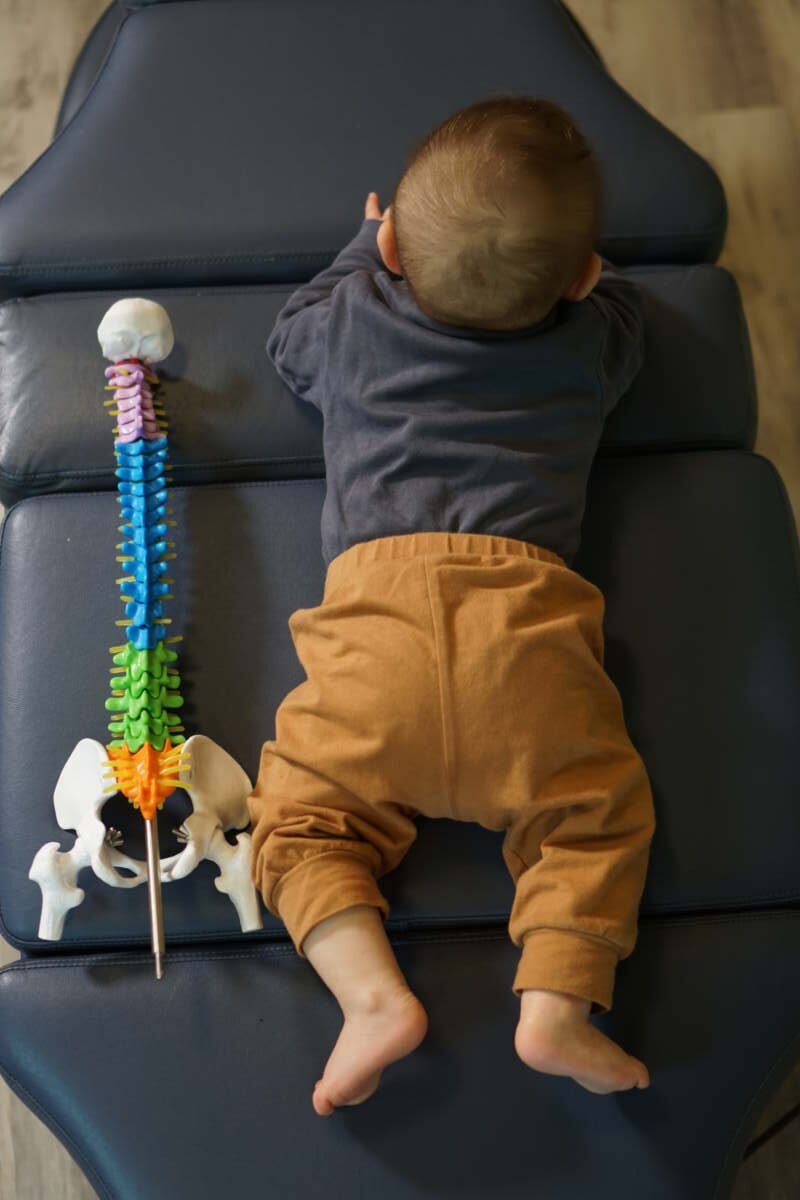
A spinal adjustment applies controlled force to restricted vertebral joints, creating cavitation (the audible “pop”), restoring range of motion, and triggering neurophysiological responses that reduce pain signaling. The mechanism involves joint mobilization, synovial fluid redistribution, and proprioceptive input that resets muscular tension patterns. Unlike passive therapies, adjustments create immediate biomechanical and neurological changes that improve movement quality and decrease nociceptive feedback from inflamed tissues.
The Immediate Biomechanical Response During Joint Manipulation
When a chiropractor delivers a spinal manipulation, something fascinating happens inside the facet joint. The space between the vertebrae opens briefly, creating a pressure differential that forms gas bubbles within the synovial fluid. This is cavitation the audible release patients hear during an adjustment.
The physics behind this phenomenon connects directly to Boyles’ law. As the vertebral alignment shifts and joint surfaces separate, intra-articular pressure drops rapidly. Dissolved gases primarily nitrogen and carbon dioxide come out of solution and form bubbles. This process takes milliseconds and resets the resting position of the joint capsule.
Force vectors matter tremendously here. A skilled chiropractor directs pressure along specific planes that match the facet joint movement anatomy. The thrust must overcome the protective muscle guarding while staying within physiological limits. Too little force and the joint won’t gap. Too much and surrounding tissues could sustain injury.
This is where understanding spinal biomechanics separates clinical expertise from generalized manual therapy. Each vertebral segment has unique orientation angles. The cervical spine requires roughly 45 degrees of rotation coupling with lateral flexion, while lumbar segments need more posterior-to-anterior force application.
| Parameter | Pre-Adjustment State | Post-Adjustment State |
|---|---|---|
| Intra-articular Pressure | Elevated (restricted) | Normalized (equilibrium) |
| Range of Motion | Limited, painfully restricted | Improved 15-25 degrees typical |
| Synovial Fluid Distribution | Uneven, stagnant pockets | Redistributed, enhanced flow |
| Muscle Tone | Hypertonic, guarding | Reduced tone, relaxed |
| Proprioceptive Signaling | Altered, pain-dominant | Reset, movement-oriented |
Joint gapping mechanics explain why that cavitation sound correlates with relief. When the joint space increases by even 1-2 millimeters, capsular ligaments receive sudden stretch. This triggers mechanoreceptor firing that signals safety to the nervous system. The perceived restriction “locked” sensation vanishes as normal mobility returns.

Patients often ask whether the popping sound equals success. Not necessarily. Some adjustments work silently. However, cavitation typically indicates the joint barrier was overcome. The goal remains restoring proper facet joint movement regardless of auditory feedback.
For conditions involving disc compression or nerve pressure, clinical outcomes improve when spinal manipulation combines with spinal decompression vs chiropractic treatment protocols. The mechanical opening from decompression complements the joint-specific mobilization from adjustments.
Quick Answer: Three Core Mechanisms That Make Adjustments Effective
Understanding how does a spinal adjustment actually work requires examining three interconnected systems. Research from 2024-2026 confirms these mechanisms work simultaneously rather than sequentially.
- Mechanical Joint Gapping: The high-velocity low-amplitude thrust separates articular surfaces by 1-3mm, breaking adhesions and stretching contracted capsular fibers. This immediately increases synovial joint space and allows restricted segments to move through their natural range. Patients perceive this as “unlocking” and often demonstrate improved flexibility within seconds of treatment.
- Neurological Reflex Inhibition: Sudden capsular stretch activates type II mechanoreceptors that inhibit gamma motor neuron firing. This reflex arc reduces muscle hypertonicity without manual massage. The neurological cascade explains why muscles relax in areas distant from the adjusted joint sensory input changes motor output throughout the spinal cord segment.
- Proprioceptive Reset and Pain Gating: Joint manipulation floods the dorsal horn with movement-based sensory information. This proprioceptive input competes with and overrides nociceptive (pain) signals through gate control mechanisms. Patientsexperience pain reduction before any tissue healing occurs because the nervous system recalibrates its threat perception of the affected area.
These mechanisms explain why patients reportImmediate results following chiropractic mobilization. The mechanical change happens first, but the neurological effects persist. Research indicates altered motor neuron pool excitability continues for 20-45 minutes post-adjustment, creating a therapeutic window for rehabilitative exercise.
Consistency matters for lasting benefits. Patients receiving regular chiropractic adjustments demonstrate cumulative improvements in movement patterns and pain thresholds. The nervous system learns new motor programs through repeated input, essentially retraining protective muscle guarding patterns.
Neurological Pathways: Why Pain Decreases Before Tissue Healing Completes
The most puzzling aspect of spinal manipulation for many patients is timing. How can pain vanish instantly when tissue healing takes weeks? The answer lies in how the nervous system processes information rather than what physically happens at the injury site.
Gate control theory, first proposed by Melzack and Wall in 1965, remains foundational to understanding manual therapy effects. Large-diameter afferent nerve fibers (A-beta)carry non-painful sensory information like touch, pressure, and vibration. Small-diameter fibers (A-delta and C) transmit pain signals. These fibers converge in the substantia gelatinosa of the dorsal horn.
When chiropractic mobilization delivers controlled joint loading, mechanoreceptors fire intensely. This barrage of non-nociceptive input literally closes the “gate” for pain signals traveling up the spinal cord. The brain receives less threat information and correspondingly reduces pain perception.
Research published in the Journal of Manipulative and Physiological Therapeutics found that spinal manipulation increased pressure pain thresholds by approximately 15% in treated segments and surrounding areas for 20-30 minutes post-intervention, suggesting regional inhibitory effects.
Beyond gating, adjustments trigger descending inhibition. The brainstem releases endogenous opioids and serotonin when joint mechanoreceptors activate. These chemicals dampen posterior horn neuron firing, creating analgesia throughout the body. This explains why cervical adjustments sometimes relieve lumbar pain the effect is systemic, not just local.
Afferent signal disruption also plays a role. Chronic pain often involves central sensitization, where the spinal cord becomes hypersensitive to all input. Normal sensations feel painful. Joint manipulation provides novel sensory stimuli that interrupt hypervigilant neural patterns. Through chronic pain management with spinal adjustments protocols, patients can break cycles of sensitization that medications alone often fail to address.
The implications extend beyond temporary relief. When pain inhibits movement, muscles weaken and joints stiffen. Breaking this cycle early prevents secondary problems from developing. Patients move better, which promotes healing, which further reduces pain a positive feedback loop replacing the negative one.
Synovial Fluid Dynamics and Joint Nutrition Recovery [2026 Data]
Spinal discs and facet joints lack direct blood supply. They depend on fluid exchange for nutrition. When joints become hypomobile, this exchange stagnates. Waste products accumulate while nutrients fail to reach target tissues. This is where the imbibition process becomes critical.
Imbibition describes how spinal discs receive nutrition through pressure changes. Compressing and releasing the disc acts like a sponge expelling waste during compression and absorbing fluid during release. Limited spinal biomechanics interrupt this cycle, starving discs and joints of essential nutrients.
A spinal adjustment restores motion that enables proper imbibition. Each facet joint movement cycles pressure, pumping synovial fluid across cartilage surfaces. This delivers glucose and oxygen while removing metabolic byproducts. Over time, improved fluid dynamics support tissue health and slow degenerative processes.
A 2025 study in Spine Journal demonstrated that patients receiving regular manual therapy showed significantly improved diffusion coefficients in lumbar discs compared to controls, suggesting restored nutrient exchange mechanisms in treated segments.
Disc hydration matters particularly for height maintenance. Adequately hydrated discs maintain separation between vertebrae, preserving foraminal space where nerve roots exit. Desiccated discs narrow, potentially compressing neural structures. By improving movement quality, chiropractic mobilization indirectly supports disc health through enhanced fluid dynamics.
Cartilage health also depends on joint loading. Chondrocytes cartilage cells require mechanical stimulation to produce matrix components. Too little loading and cartilage thins. Too much and it wears. Proper facet joint movement distributes forces optimally, promoting rather than damaging cartilage integrity.
Clinical evidence supports combining therapies. Patients exploring spinal decompression improves mobility alongside adjustments often report better outcomes than either intervention alone. Decompression addresses disc-level fluid exchange while adjustments optimize facet joint mechanics.
High-Velocity Low-Amplitude Technique: Force Application Analysis
The most common chiropractic adjustment technique goes by several names HVLA, diversified technique, or simply spinal manipulation. What distinguishes this approach from other manual therapy methods comes down to speed and specificity.
High-velocity means the thrust reaches completion in roughly 100-200 milliseconds. That’s faster than voluntary muscle contraction. The body cannot react protectively during this window. Low-amplitude indicates minimal joint displacement the thrust travels perhaps 2-4 millimeters before stopping against an anatomical barrier.
This combination matters clinically. Speedovercomes protective muscle guarding without triggering resistance. Amplitude stays within physiological limits, preventing injury. The result: a safe, controlled joint mobilization that achieves cavitation without risking tissue damage.
Chiropractors develop this skill through extensive training. The thrust must precisely match vertebrate anatomy at each spinal level. Contact points, line of drive, and patient positioning all influence outcomes. What looks like a simple push actually requires sophisticated biomechanical understanding.
| Characteristic | HVLA Thrust | Joint Mobilization |
|---|---|---|
| Speed | High (100-200ms) | Slow, sustained |
| Force Application | Specific, localized | Generalized, diffuse |
| Amplitude | Low (2-4mm) | Variable |
| Cavitation | Typically occurs | Uncommon |
| Primary Use | Joint dysfunction, ROM restriction | Capsular tightness, gentle mobilization |
| Pain Threshold Required | Low to moderate tolerance | Minimal, gentle approach |
Mobilization techniques serve different purposes. Low-velocity, sustained stretches improve capsular extensibility gradually. These gently address joints too acute for thrusting motions. Skilled practitioners select the appropriate technique based on patient presentation sometimes mobilization, sometimes HVLA, often both in sequence.

Understanding HVLA mechanics helps patients appreciate why adjustments feel different from massage. Massage addresses soft tissues. Adjustments target joint complexes. Both serve important roles in musculoskeletal care, but their mechanisms differ substantially.
For patients candidates for conservative care, reviewing chiropractic adjustment benefits over surgery provides valuable perspective. Surgery permanently alters anatomy. Adjustments restore function without tissue removal. When conservative options succeed, they preserve options for future treatment if needed.
How to Prepare Your Body for Optimal Adjustment Response
What patients do before appointments influences outcomes. A properly prepared body responds better to chiropractic mobilization. Simple preparation steps maximize adjustment effectiveness.
- Hydrate adequately for 24-48 hours before treatment: Synovial fluid requires water. Dehydrated tissues resist stretching and recover slower. Aim for half your body weight in ounces daily, increasing slightly on treatment days.
- Apply heat to tight areas before arriving: Warming tissues increases pliability and reduces protective muscle guarding. A hot shower or heating pad for 10-15 minutes pre-appointment helps muscles relax during manipulation.
- Avoid anti-inflammatory medications on treatment day: NSAIDs dampen the inflammatory response needed for healing. While pain relief seems helpful, natural inflammatory processes contribute to tissue repair post-adjustment.
- Practice relaxed breathing during examination: Holding your breath increases muscle tension consciously. Focus on slow, diaphragmatic breathing to keep your nervous system calm during assessment and treatment.
- Wear comfortable, non-restrictive clothing: Tight waistbands or structured fabrics limit positioning options. Comfortable clothes allow proper placement on the table and unrestricted movement during the thrust.
Patients often arrive tense from driving or work stress. The transition from daily demands to clinical care benefits from intentional unwinding. A few minutes of calm breathing in the waiting area shifts nervous system state toward receptivity.
Communicating areas of concern clearly helps your chiropractor target treatment effectively. Note what movements hurt, when symptoms worsen, and what positions provide relief. This information guides which segments require manipulation versus other interventions.
Many patients exploring natural lower back pain relief find adjustments work best as part of comprehensive care. Preparation extends beyond single appointments lifestyle factors including posture, activity level, and stress management all influence spinal health.
Contraindications and Safety Screening Before Spinal Manipulation
Spinal manipulation proves safe for most patients, but certain conditions require caution. Responsible chiropractors screen for red flags that might contraindicate HVLA techniques or require modification.
Bone fragility presents significant concerns. Patients with advanced osteoporosis face increased fracture risk from thrusting forces. In these cases, chiropractors substitute gentler mobilization or instrument-assisted techniques. Screening typically involves reviewing medical history and, when indicated, ordering imaging before treatment.
Vascular considerations matter particularly for cervical spine work. The vertebral artery passes through the cervical vertebrae. Extreme rotation combined with extension could potentially compromise blood flow in susceptible individuals. Chiropractors perform screening tests and modify technique accordingly, often avoiding the classic rotation-assisted cervical adjustment in favor of safer alternatives.
What Red Flags Require Imaging Before Adjustment?
Certain signs warrant diagnostic imaging before any manual therapy:
- Progressive neurological deficits (weakness, numbness spreading)
- Bowel or bladder dysfunction suggesting cauda equina
- Significant trauma history in older adults
- Unexplained weight loss accompanying back pain
- Night pain that fails to improve with position changes
- History of cancer with new spinal symptoms
Most back pain lacks these concerning features. But when red flags appear, responsible care means investigating before manipulating. X-rays reveal structural abnormalities. MRI shows soft tissue pathology including disc herniations and cord compression.
Patients often appreciate understanding why chiropractors take thorough histories. That detailed questioning isn’t mere curiosity it’s safety screening. Likewise, preventing neck pain with adjustments involves proper technique selection and thorough screening rather than avoiding cervical manipulation entirely.
Qualified chiropractors recognize when to adjust, when to mobilize, and when to refer. This clinical judgment develops through education and experience. Patients should feel confident asking about technique rationale as informed participants understand, safety partnerships between patient and provider yield best outcomes.
Key Takeaways: Understanding Adjustment Mechanisms for Better Outcomes
Spinal manipulation works through interconnected biomechanical and neurological pathways. Appreciating these mechanisms helps patients participate actively in their care.
- Cavitation occurs from pressure changes, not bone cracking: The audible release reflects gas bubble formation within synovial fluid as joints gap, indicating the manipulation successfully overcame joint restriction barriers.
- Pain relief often precedes tissue healing: Neurological mechanisms including gate control and descending inhibition reduce pain signals immediately, even before structural healing completes.
- Joint mobility enables nutritional exchange: Restored facet joint movement improves synovial fluid dynamics, supporting cartilage health through enhanced nutrient delivery and waste removal.
- Technique selection matters for safety: HVLA thrusts suit most patients, but gentler mobilization serves those with contraindications including osteoporosis or acute inflammation.
- Preparation optimizes treatment response: Hydration, relaxation, and proper communication help patients receive maximum benefit from each adjustment session.
Understanding spinal manipulation transforms patients from passive recipients to informed participants. When you know why that audible release occurs, what neurological changes follow, and how joint mechanics influence whole-body health, treatment becomes partnership rather than procedure.
For comprehensive musculoskeletal care including posture correction with chiropractic care, understanding adjustment mechanisms provides context for complementary interventions. Posture work, rehabilitative exercise, and ergonomic counseling all integrate more effectively when patients appreciate how spinal manipulation contributes to overall movement health.
FAQ: Common Questions About Spinal Adjustment Mechanics
Is the popping sound during an adjustment bones cracking?
No, the sound comes from gas bubbles forming in joint fluid. When joint pressure drops during vertebral alignment manipulation, dissolved gases release from solution. This cavitation phenomenon creates the audible “pop.” No bone breaking or cracking occurs just physics at work in your synovial joints.
Are spinal adjustments safe for everyone?
Generally yes, with proper screening and technique modification. Research indicates complication rates below one in several million manipulations. However, conditions like severe osteoporosis, vertebral instability, or certain vascular anomalies require alternative approaches. Qualified chiropractors screen for these contraindications before treatment.
How long do adjustment benefits last?
Immediate effects typically persist 24-48 hours, with cumulative benefits over time. The neurological window of reduced muscle guarding lasts roughly half an hour to an hour. However, restored joint mechanics continue functioning until protective patterns return. Regular care retrains these patterns for longer-lasting results.
Can I adjust my own back safely?
Self-cracking lacks the specificity and control of professional intervention. Customary self-manipulation often hypermobile segments rather than restricted ones, potentially creating instability. Professional assessment identifies which specific joints require manipulation along proper vectors with appropriate force.
How many adjustments will I need?
Treatment plans vary based on individual presentation and goals. Acute issues might resolve in 3-6 visits. Chronic conditions often require longer courses. Maintenance care typically involves monthly visits. Your chiropractor should explain their recommendations and rationale clearly during your initial examination.
What should I expect after my first adjustment?
Most patients report immediate improvement in mobility and reduced pain. Some experience mild soreness similar to post-exercise fatigue as muscles adapt to new movement patterns. This typically resolves within 24 hours. Drinking water and gentle movement helps the body integrate treatment effects.
For those ready to experience these mechanisms firsthand, our comprehensive chiropractic services provide evidence-based spinal manipulation tailored to individual needs and preferences.