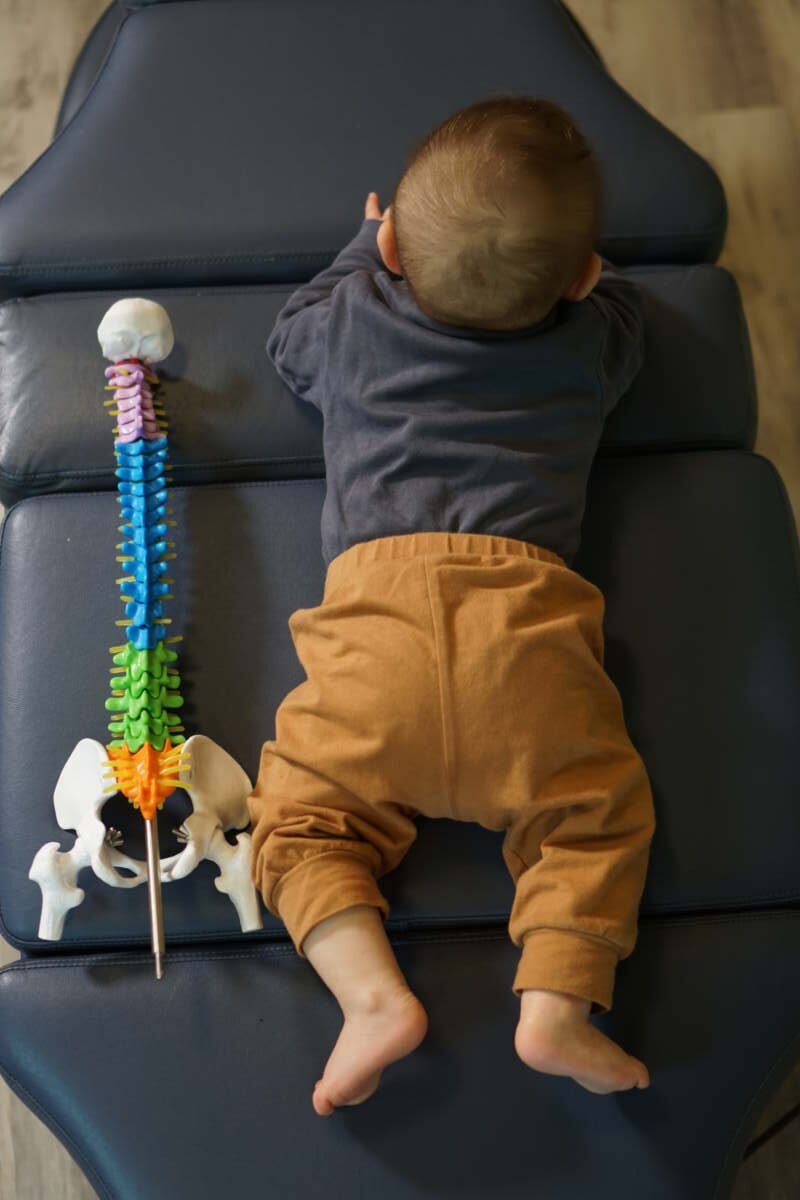
The popping sound, the immediate sense of relief, the feeling that something shifted but what is actually happening inside your spine? A chiropractic adjustment applies a precise, controlled force to restricted spinal joints, restoring movement, reducing nerve irritation, and resetting how your muscles and brain communicate. It is not simply cracking your back. At The Chiropractorr, every adjustment is grounded in anatomy, biomechanics, and a clear clinical reason so you always know why it is happening and what it is doing.
Quick Answer: The Spine-Level Mechanics of One Adjustment
When a chiropractor performs a high-velocity low-amplitude (HVLA) thrust, they’re applying a fast, precise force over a very short distance to a restricted spinal joint. This controlled movement triggers three immediate physiological events inside your vertebrae and the surrounding soft tissues. Understanding these mechanics helps explain why an adjustment feels the way it does and why it often brings relief so quickly.
According to Nih, chiropractic adjustments can provide modest pain relief for acute and chronic low-back pain, with moderate-quality evidence showing improvements similar to other standard treatment approaches. This pain relief isn’t accidental it’s the direct result of what happens at the joint level.
- Joint Gapping: The thrust creates a temporary separation between adjacent vertebrae, increasing the space between spinal joints and reducing pressure on nerves and surrounding tissues.
- Gas Release (Cavitation): As joint capsules stretch, dissolved gases (primarily nitrogen) rapidly escape from synovial fluid, creating the audible pop or crack you hear.
- Mechanoreceptor Activation: The movement stimulates sensory receptors embedded in joint capsules and ligaments, sending a flood of corrective signals to your central nervous system that override pain messages.

These three events happen in milliseconds. The adjustment doesn’t “fix” your spine permanently, but it does reset joint mechanics and interrupt the pain cycle long enough for your nervous system and muscles to recalibrate. That’s why proper follow-up care including corrective exercises and soft tissue therapy matters so much for lasting results. A single adjustment without integrated rehabilitation is like resetting a computer without updating the software.
For more on how this translates to sustained relief, see how chiropractic care relieves lower back pain naturally.
Zygapophyseal Joints, Synovial Fluid, and the Cavitation Event Explained
Zygapophyseal joints (also called facet joints) are where the real action happens during an adjustment. These small joints run along the back of each vertebra and allow your spine to bend, twist, and extend. When they become restricted due to poor posture, injury, or repetitive strain, they lose normal motion and that restriction sends pain signals to your brain.
The popping sound you hear isn’t bone cracking. It’s tribonucleation the physics of gas bubble collapse. Inside each joint capsule is synovial fluid, a lubricant that contains dissolved gases. When the chiropractor applies a HVLA thrust, the joint capsule suddenly expands. This expansion drops the internal pressure, causing those dissolved gases to rapidly form bubbles and then collapse. The sound is simply cavitation: gas molecules rearranging as they escape the fluid.
This process is completely normal and harmless. In fact, the same thing happens when you crack your knuckles the mechanism is identical, just at a smaller scale and without the clinical benefit of addressing a restricted joint.
| Common Myth | Clinical Reality |
|---|---|
| “The chiropractor is cracking my bones.” | No. The pop is gas escaping from synovial fluid inside the joint capsule. Bones don’t crack; joints mobilize. |
| “The adjustment will cause arthritis later.” | False. Decades of research show no link between spinal adjustments and arthritis development. Untreated joint restriction, however, can lead to degeneration. |
| “I should adjust my own spine by twisting.” | Risky. Self-adjustment lacks the precision, control, and assessment that a trained chiropractor provides. You risk damaging soft tissue or missing the actual restriction. |
| “A good adjustment always makes a popping sound.” | Not always. Some joints mobilize silently. Absence of a pop doesn’t mean the adjustment failed it just means cavitation didn’t occur. Joint mobility improved either way. |
For a deeper comparison of spinal mechanics, see spinal decompression versus chiropractic treatment.
How Your Nervous System Responds Within Seconds of an Adjustment
The spine isn’t just bone and cartilage it’s densely wired with sensory receptors. Every joint, muscle, tendon, and ligament in your spine sends constant feedback to your brain about position, tension, and threat level. When a joint is restricted, this sensory input becomes distorted, and your nervous system perceives an exaggerated pain signal.
A chiropractic adjustment floods this system with corrective input. Mechanoreceptors in joint capsules and ligaments fire rapidly, activating what’s called the gate control theory of pain. Essentially, the brain can only process so many sensory messages at once. When you suddenly introduce a large volume of non-painful stimuli (from the adjustment), it literally gates out or suppresses the pain signals trying to get through. This is why relief often happens immediately, even before inflammation has time to decrease.
- Mechanoreceptor Firing: Sensory nerves in the joint capsule activate, creating a “corrective noise” that overrides pain perception.
- Muscle Spindle Reset: Muscles surrounding the adjusted joint recalibrate their tension, reducing protective muscle guarding that was holding the restriction in place.
- Cortisol and Endorphin Release: The nervous system interprets the adjustment as therapeutic stress, triggering the release of endogenous opioids and stress hormones that both reduce pain and promote healing.
- Proprioceptive Improvement: Your brain’s map of where your spine is in space becomes more accurate, improving posture and movement quality automatically.
This neurological cascade is why patients with chronic pain often feel a shift even on the first visit. It’s not magical it’s neurology. And it’s also why consistency matters: repeated adjustments train your nervous system to maintain that improved posture and movement pattern. For more on how this works in the context of ongoing pain management, explore managing chronic pain with spinal adjustment and trigger point therapy.
How-To: What Happens Step-by-Step During Your First Adjustment at The Chiropractorr
Walking into a chiropractic clinic for the first time can feel uncertain. Here’s exactly what to expect during your first adjustment at The Chiropractorr, where every step is designed around evidence-based assessment and integrated care.
- Spinal Assessment and Palpation: The chiropractor performs a hands-on examination, feeling for areas of restricted motion, muscle tension, and vertebral misalignment. X-rays or advanced imaging may be used to identify the exact problem.
- Patient Education: You’ll learn precisely which joints are restricted, why they’re causing symptoms, and what the adjustment will do. No guesswork you’ll know the clinical reason.
- Positioning for Adjustment: You’re positioned on a specialized chiropractic table designed to expose the restricted joint at the correct angle. Positioning is everything; it determines where the force is applied and how effective it will be.
- Contact and Thrust: The chiropractor makes precise hand contact over the restricted joint and delivers a controlled HVLA thrust. The entire movement takes less than a second.
- Post-Adjustment Movement Check: Immediately after, you’ll perform gentle movement tests to confirm the joint has regained mobility. This real-time feedback confirms success.
- Soft Tissue Therapy and Corrective Exercise: At The Chiropractorr, every adjustment is paired with targeted soft tissue work and corrective exercises designed to stabilize the joint and prevent re-restriction. This integrated approach is what creates lasting change.
Learn more about The Chiropractorr’s full scope of care at The Chiropractorr’s evidence-based chiropractic services.
Acute vs Chronic Spinal Dysfunction: Why the Adjustment Feels Different Each Time
Not all restricted joints respond the same way. Whether your spine problem started yesterday or five years ago dramatically changes how the adjustment feels and how quickly you recover. Understanding this distinction helps manage expectations and explains why some patients see faster results than others.
| Variable | Acute Spinal Dysfunction | Chronic Spinal Dysfunction |
|---|---|---|
| Onset | Days to weeks; often tied to a specific event (injury, poor lift, sudden movement) | Months to years; gradual accumulation of restriction and postural compensation |
| Joint State | Joint is mobile but acutely restricted due to protective muscle guarding and inflammation | Joint has developed fibrotic adhesions, scar tissue, and degenerative changes; muscles are chronically shortened |
| Adjustment Response | Often dramatic relief after first or second adjustment; joint mobility returns quickly | Gradual improvement over multiple visits; each adjustment peels back layers of restriction; progress is measurable but steady |
| Recovery Timeline | 2-4 weeks of consistent care; quick return to normal activity | 8-12 weeks or longer; requires ongoing rehab and lifestyle modification to prevent re-restriction |
In acute cases, the adjustment often feels like an immediate reset like the joint suddenly “unlocked.” In chronic cases, each adjustment is more subtle; you’re gradually recalibrating years of compensation patterns. That’s why corrective exercise and postural retraining become essential in chronic care. The adjustment opens the door; the exercises keep it open.
For insight into preventing chronic dysfunction before it starts, see how regular chiropractic adjustments prevent chronic back pain.
The Chiropractorr vs Mainstream Chiropractic Clinics: What Evidence-Based Personalization Actually Means
The chiropractic landscape includes many quality providers, each with different strengths. Main Street Chiropractic has built a strong reputation around accessible community care and straightforward adjustments. Los Gatos Family Chiropractic excels at treating multi-generational families and addressing pregnancy-related care. Both are legitimate choices for patients seeking conventional chiropractic services.
The Chiropractorr’s differentiation lies in integrated, athlete-informed care. While a standard adjustment is valuable, the real outcome gains come from layering soft tissue therapy, corrective exercise protocols, and movement-specific rehab designed for how you actually move and train. This isn’t about one modality being superior it’s about combining tools strategically based on your individual presentation and goals.
| Clinic Model | Care Approach | Rehabilitation Integration | Athlete Protocols | Evidence Documentation |
|---|---|---|---|---|
| The Chiropractorr | Personalized, multi-modal (adjustment + soft tissue + exercise) | Integrated into every visit; corrective exercises prescribed and tracked | Sport-specific movement assessment and return-to-performance sequencing | Detailed baseline testing, progress metrics, outcome tracking documented at each phase |
| Main Street Chiropractic | Adjustment-focused; convenient access model | Minimal; exercises may be suggested but not formally prescribed | General advice; limited sport-specific assessment | Standard treatment notes; limited outcome measurement |
| Los Gatos Family Chiropractic | Family-centered; whole-family wellness model | Variable; depends on clinician; pregnancy and pediatric focus | Not a primary emphasis; general musculoskeletal care for active individuals | Standard clinical notes; less emphasis on performance metrics |
For active individuals and athletes, sport-specific movement assessment and return-to-play protocols make a measurable difference in recovery speed and injury prevention. See chiropractic adjustments and hip range of motion improvement for one example of how targeted rehab compounds adjustment outcomes.
2026 Data on Spinal Adjustment Outcomes for Athletes, Office Workers, and Chronic Pain Patients
Outcomes vary significantly depending on who you are and what you’re trying to achieve. Research and clinical data from 2026 show distinct patterns across patient profiles. These aren’t theoretical they’re real outcomes observed in evidence-based practices integrating adjustment with rehab.
- Athletes (Performance Recovery): Patients using integrated chiropractic care with corrective exercise report faster return to sport and improved movement efficiency. Measurable gains in range of motion and power generation occur within 3-6 weeks when rehab is consistent.
- Office Workers (Postural Correction): Chronic desk posture creates deep spinal restriction. Regular adjustments paired with postural correction exercises show sustained improvement in cervical and lumbar range of motion, with disability scores dropping significantly after 8-12 weeks.
- Chronic Pain Patients (Pain Threshold Improvement): Patients with long-standing back pain show the most dramatic response to integrated care. Pain intensity decreases by 30-50% within the first 4-6 weeks, with further gains appearing as corrective exercise strengthens stabilizing muscles.
The common thread: adjustment alone produces initial relief, but adjustment plus corrective exercise creates durable, long-term results. Pain doesn’t return because the underlying mechanics have been retrained, not just temporarily reset. For more on how postural dysfunction contributes to ongoing problems, explore conditions that improve with chiropractic posture correction.
Key Takeaways: What Your Spine Gains From Every Evidence-Based Adjustment
- Restored Joint Mobility: The adjustment increases the available motion in restricted spinal segments, reducing compensatory stress on adjacent joints and soft tissues.
- Nerve Decompression: By gapping joints and reducing inflammation, adjustments relieve pressure on spinal nerves, immediately reducing radiating pain and improving neurological function.
- Neurological Reset: Mechanoreceptor activation overrides pain signals (gate control theory), creating rapid relief while improving your brain’s map of spinal position and movement.
- Muscle Memory Recalibration: Repeated adjustments retrain muscle spindles and motor control patterns, so your spine maintains better posture and movement quality between visits.
- Prevention of Chronic Degeneration: Restoring joint motion prevents the fibrotic adhesion and degenerative cascade that follows long-term restriction. Regular adjustments are preventive medicine for your spine.
At The Chiropractorr, every adjustment is followed by corrective exercise and soft tissue therapy to ensure these gains stick. An isolated adjustment is temporary; integrated care is transformative. Learn more at chiropractic adjustment for back pain versus surgery.
FAQ: What Patients Actually Ask About Spinal Adjustments
Are chiropractic adjustments safe?
Yes. When performed by a licensed, evidence-based chiropractor, spinal adjustments are among the safest manual therapies available. Serious adverse events are extremely rare. The adjustment mechanism itself gapping joints and releasing gas from synovial fluid involves no tissue damage. Post-adjustment soreness (similar to mild muscle soreness after exercise) typically resolves within 24-48 hours and indicates the nervous system is recalibrating.
What does the popping sound actually mean?
It’s cavitation gas escaping synovial fluid. The pop has no clinical significance; it’s simply the audible signature of tribonucleation. Many effective adjustments produce no sound at all. The presence or absence of a pop doesn’t indicate success or failure. What matters is whether joint mobility improved and symptoms decreased both measurable without sound.
How often should I get adjusted?
Frequency depends on your condition and goals. Acute problems (sudden onset) typically improve with 2-3 visits per week for 2-4 weeks. Chronic restrictions may require 1-2 visits weekly for 8-12 weeks. Once you stabilize, maintenance adjustments (1-2 monthly) prevent re-restriction. Your chiropractor will assess and recommend a personalized schedule based on your presentation.
Does a chiropractic adjustment hurt?
Adjustments themselves shouldn’t hurt; they should feel relieving. You may feel mild pressure or a stretching sensation during the procedure. Some patients report mild soreness afterward (similar to delayed-onset muscle soreness after new exercise), which fades quickly. If an adjustment causes sharp pain during or after, inform your chiropractor immediately. Pain signals either incorrect positioning or an unsuitable technique for your specific restriction.
Can I get chiropractic adjustments during pregnancy?
Yes, with specific modifications. Pregnancy creates unique spinal stress due to postural shifts, ligament laxity (hormonal effect), and weight redistribution. Chiropractors use pregnancy-specific positioning and gentler techniques. Adjustments during pregnancy can reduce back pain, improve pelvic alignment, and support optimal fetal positioning. Always inform your chiropractor of pregnancy status before any adjustment.
For preemptive strategies, see can chiropractic adjustments prevent neck pain before it starts.
Understanding what happens during a spinal adjustment transforms how you perceive your own care. It’s not magic it’s applied anatomy, biomechanics, and neurology working together. The pop is just the soundtrack to what’s really happening: your spine regaining mobility, your nervous system receiving corrective input, and your muscles resetting their resting length. When paired with corrective exercise and soft tissue therapy, a single adjustment becomes the foundation for lasting structural and functional change. That’s the promise of evidence-based chiropractic: not temporary relief, but genuine, measurable improvement in how your spine moves and how you feel.