Foam rolling and myofascial release overlap, but they aren’t the same thing. Foam rolling is a self-applied tool that research suggests can improve short-term range of motion and ease post-workout soreness. Hands-on myofascial release is a clinician-guided technique that targets a specific restricted area, adjusts pressure in real time and fits into a larger treatment plan.
By Dr. Orr Soffer, DC · Chiropractor in Campbell, CA
If you own a foam roller and still feel the same tight spot every week, this one is for you. Below: what each approach actually does, a 6-minute rolling routine you can do tonight, and the signs that a stubborn area needs a closer look.
What’s the difference between myofascial release and foam rolling?
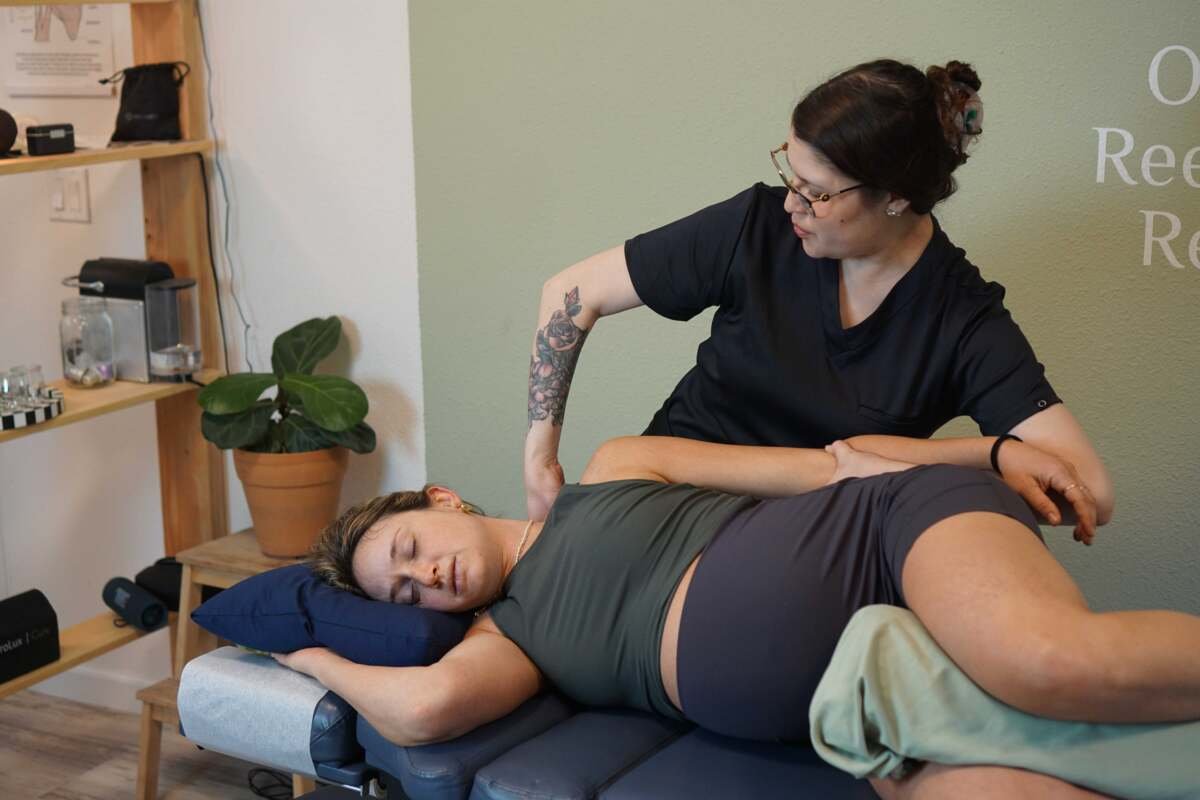
Fascia is the connective tissue that wraps and links your muscles. Myofascial release therapy is a manual technique where a clinician applies slow, sustained pressure and stretch to muscle and fascia, feeling how the tissue responds and changing angle, depth and direction as it softens. Often the patient moves the joint while the clinician holds pressure, which turns a passive treatment into an active one.
Foam rolling is the do-it-yourself cousin. You control pressure with body weight, the contact area is broad, and it costs about as much as a pizza. It’s marketed as “self-myofascial release,” but that name oversells what a cylinder of foam can do, as you’ll see below.
| Foam rolling | Hands-on myofascial release | |
|---|---|---|
| Who applies it | You | A trained clinician |
| Precision | Broad, large muscle groups | Specific spot, angle and depth |
| Best for | Warm-ups, general stiffness, post-training soreness | Recurring or one-sided restrictions, areas a roller can’t reach well |
| Assessment | None | Part of an exam that looks for the cause |
| How often | Daily if it helps | Usually a short series, then home care |
Does foam rolling actually release fascia?
Probably not in the literal sense. Fascia is tough tissue, and body-weight pressure for a minute is unlikely to physically reshape it. The more plausible explanation is that pressure changes how your nervous system tolerates stretch, so the muscle lets you move further for a while. That’s why a rolled-out hamstring feels looser for an hour and then drifts back.
That doesn’t make rolling useless. A 2020 systematic review and meta-analysis in the Journal of Bodywork and Movement Therapies found foam rolling consistently increased range of motion, looked useful for recovering from exercise-induced muscle damage and didn’t appear to cause harm. Beyond range of motion, though, the authors couldn’t conclude it directly improves athletic performance.
A 2019 meta-analysis in Frontiers in Physiology reached a similar verdict: effects were small overall, with modest flexibility and sprint gains when rolling came before exercise and reduced muscle pain afterward. The authors concluded the evidence best supports rolling as a warm-up tool. In plain English: a helpful short-term primer, not a fix.
What does hands-on myofascial release add?
A clinician’s hands can do things a roller can’t. They can find the exact edge of a restriction, work slowly near sensitive areas like the hip flexors, neck or jaw, and combine pressure with movement. More importantly, hands-on work happens inside an exam, so the question shifts from “where does it hurt?” to “why does this keep tightening?”
That distinction matters. A calf that tightens every week might be reacting to stiff ankles or a change in training load. A tender band in the upper trap might be a myofascial trigger point that refers pain into the head. And what feels like a knot can turn out to be something else entirely, which is why telling a spasm from a knot changes what helps.
The honest caveat: the research on manual myofascial release is mixed in quality. A 2021 meta-analysis on chronic low back pain found it improved pain and physical function, but the authors noted the trials were few and of low quality. That’s why we use it as one part of a plan alongside exercise, not as a standalone cure.
A 6-minute foam rolling routine you can do tonight
Use a medium-density roller. Aim for pressure around a 5 or 6 out of 10 on a discomfort scale, breathe slowly and keep each pass slow, about an inch per second.
- Calves (40 seconds per leg). Sit with one calf on the roller, the other leg crossed on top for more pressure. Roll from just above the ankle to just below the knee. On a tender spot, pause 10 to 15 seconds and point and flex the ankle 5 times.
- Quads (40 seconds per leg). Face down on your forearms, roller under the front of the thigh. Roll from the hip crease to a hand’s width above the kneecap. Bend and straighten the knee 5 times on any tight spot.
- Glutes (40 seconds per side). Sit on the roller, cross one ankle over the opposite knee and lean toward the crossed-leg side. Small rolls, no more than a few inches.
- Upper back (60 seconds). Lie with the roller across your mid-back, hands supporting your head. Roll between the bottom of the shoulder blades and the top of the shoulders, then pause and gently extend over the roller 5 times. Keep it off your low back. For more, pair this with our 8-minute mid-back mobility routine.
- Lats (30 seconds per side). Lie on your side with the bottom arm overhead and the roller just below the armpit. Roll a few inches down the side of the ribs.
Safety cues: skip bones and joints, don’t roll the front or side of your neck or directly on the low back, and stop if you feel sharp pain, numbness or tingling. Afterward, move: 10 bodyweight squats, 5 lunges per side and 10 arm circles help you use the range you just gained.
When is foam rolling enough, and when should you get it checked?
Rolling is probably all you need if the tightness shows up after training, eases within a day or two and you can move fully once you’re warm. It’s time for an evaluation if any of these sound familiar:
- The same spot returns week after week despite regular rolling and stretching.
- One side is clearly stiffer or weaker than the other.
- The tightness started after an injury, fall or sudden spike in training.
- It limits a lift, your running stride or reaching overhead.
- Pain spreads into an arm, leg or your head.
- Rolling feels good for an hour but the problem is unchanged a month later.
How We Treat Muscle Tightness at The ChiropractOrr
Every visit starts with an exam. We look at where it hurts and where it’s coming from: joint motion, movement patterns, strength on each side and the history of how it started. From there we follow a simple sequence: Offload, Rebuild, Reeducate.
Offloading usually means hands-on work. Depending on what we find, that can include myofascial release, FAKTR, instrument-assisted work, cupping and adjustments for stiff joints, all part of our specialized soft tissue therapy. Some patients also benefit from clinically directed massage and assisted stretching between visits. If you’re curious about the tool side, our post on IASTM muscle scraping explains how that fits in.
Rebuilding and reeducating happen through a short personalized rehab exercise program. Often that includes your foam roller, used for specific spots and for a specific purpose rather than rolling everything until it hurts. We see patients in-clinic in Campbell and offer mobile visits around Los Gatos, Saratoga, Cupertino, San Jose and Santa Clara. We’re a direct-pay clinic, accept HSA and FSA cards and provide superbills for insurance reimbursement.
When to See a Doctor First
Skip the roller and get medical care first if you notice:
- Calf pain with swelling, warmth or redness, especially after a long flight, surgery or a period of immobility. This can signal a blood clot, so don’t roll it; seek same-day care.
- Chest pain, sudden shortness of breath or stroke signs such as face drooping, arm weakness or slurred speech. Call 911.
- Numbness, progressive weakness, or new loss of bladder or bowel control.
- Extreme muscle pain and weakness with dark, cola-colored urine after a hard workout.
- Pain after a fall or significant trauma, or pain with fever or unexplained weight loss.
- Osteoporosis, a bleeding disorder, blood thinners or recent surgery. Ask your doctor before rolling.
Key Takeaways
- Foam rolling likely works through your nervous system rather than physically “releasing” fascia, and its effects are real but short-lived.
- Research best supports rolling as a warm-up for a small flexibility boost, with some help for post-workout soreness.
- Hands-on myofascial release is more precise and comes with an exam that looks for the cause.
- If the same spot keeps coming back, rolling harder isn’t the answer. Finding out why it tightens is.
FAQ
Is foam rolling the same as myofascial release?
Not quite. Foam rolling is often called self-myofascial release, but it applies broad pressure with your body weight, while hands-on myofascial release uses slow, targeted pressure and stretch that a clinician adjusts as the tissue responds. Both can help tight muscles feel and move better; the hands-on version is more precise and is usually part of a larger treatment plan.
How long should you foam roll each muscle?
For most people, 30 to 60 seconds per muscle group is plenty. Pause for 10 to 15 seconds on a tender spot and add a little movement, such as flexing and pointing the ankle while rolling the calf. Longer and harder is not better, and rolling until you bruise is a sign you overdid it.
Should you foam roll before or after a workout?
Both can work, but a meta-analysis found the clearest support for rolling before exercise as part of a warm-up, where it gives a small, short-term boost in flexibility. Rolling afterward may ease muscle soreness. Either way, follow rolling with active movement so you use the new range.
Can foam rolling make pain worse?
It can if you roll over bones, joints, the front or side of the neck, or an area that is acutely injured, swollen or bruised. Sharp pain, numbness or tingling during rolling means stop. If the same spot keeps flaring despite regular rolling, get it evaluated rather than pressing harder.
If a tight spot keeps coming back no matter how much you roll, we’d be glad to take a look. Book your initial evaluation or call (408) 641-0739. Can’t make it to Campbell? Ask about mobile visits and we’ll come to you.
Written by Dr. Orr Soffer, DC, chiropractor at The ChiropractOrr in Campbell, CA. This article is educational and not a substitute for an individual medical evaluation.